Showing posts with label environment. Show all posts

Friday, 5 July 2019

What should we ask about Tiny Homes - Part 3


The final part in a series looking at issues in the Tiny House movement. You can read Part 1 here and Part 2 here.

After exploring the issues of classism and financial accessibility as well as the difference between a small home and a Tiny Home, in this final chapter in the series, we will take a look at accessibility. 

Are Tiny Homes really for all?


Of course on this blog I will consider accessibility, how could I not? On first appearances, Tiny Homes may be a good accessible alternative and for some they certainly are: the small space puts everything close to hand and the home owner doesn’t need to worry about maintaining and looking after a large residence. Additionally the portable nature of the traditional Tiny Home means that they can be located in a place that is convenient and beneficial to the owner – close to relatives or amenities for example, or even in the back garden of a relative. We are also used to the concept of disabled people or those with particular adaptations living in smaller units - whether for their own benefit or somebody else’s – as in the case of retirement units and sheltered accommodation so the idea of “putting” disabled people in affordable Tiny Homes may not be that alien. The reality however is that Tiny Homes are often far from accessible and worse, the Tiny Home Movement can have a latent thread of disableism running through it’s rhetoric.

Though not at the core of it, the Tiny House Movement is very much about aspirational lifestyle and reflects aspects of health and well-being trends which can includes things such as “healthy” eating, being active and the firm belief (divorced from any spiritual roots) that yoga can cure all. A common feature of Tiny Homes is that the sleeping area is in an elevated loft space that must be accessed by some step or ladder arrangement. This itself presents an obvious accessibility hurdle but this is further exaggerated by those living in tiny homes who often talk of it as a way of keeping fit or staying lithe into old age. As is common in many other areas of our society the idea that we may become ill or disabled at any point is one people simply don’t contemplate. There are, thankfully, an increasing number of designs which have ground level beds or beds that fold or slide out of craftily hidden nooks. Certainly the opportunity for customisation and bespoke building does mean that there is room for innovation and the opportunity for accessible small space beds, but it isn’t currently the norm.
Pauline Sugarman's clever design with a slide away bed.

When pulled out the bed blocks access to other features
That need for space saving and clever storage is wonderful and from a design point of view something I love. However in terms of accessibility it’s not always great. While from a design point of view I love beds which magically appear out from under a sofa or fold down from a wall, the reality is that you can only use the space for one thing at a time: it is either bedroom or living room (or office or whatever the designated usage is). If you want to move from the bedroom to a sitting room or a craft space you have to get out of bed, tidy all your bedding away and physically move the bed to access your other space. The reverse may be even more difficult: imagine being somebody with a chronic illness who needs to lie down after being sat working for a short while. They need to tidy their office/craft/leisure activity away safely and securely, possibly move a piece of furniture or two and then assemble/reveal/lower the bed and adjust or add bedding before being able to get into it. That’s an awful lot to ask of somebody with limited capability. 

From my own point of view there would be a couple of unexpected challenges to living in a Tiny House, and they are both to do with laundry. Many Tiny Houses are designed without space for a washing machine or any drying space. For many this is a reasonable decision - they have access to laundry facilities on their parking site or are able to take their laundry to a launderette (or in one case were able and content to wash their clothes in a pot over an open fire outside). This is absolutely fine if it is something you can do. But it's not something I can do, I need a washing machine in easy reach and I need the space to be able to dry things or an efficient washer-dryer combo that can operate off of whatever electrical power supply I have. Additionally though, I need a lot of clothes. No this isn't just me justifying owning a lot of clothes it's actually a great adaptation for disabled people. If you don't have the energy to do a load of laundry you still need to have clean clothes to wear. So you need enough options to have stuff waiting to be washed and ready to wear. But that takes up space and means the common Tiny House lifestyle hack of downsizing a wardrobe or utilising a "capsule wardrobe" just isn't feasible. With these extra space needs a Tiny House may just not suite some disabled people. 

Think also of getting in to a Tiny Home – most are raised on trailers or on a temporary foundation and require a set of steps to get in to. Obviously there is an accessibility issue right away. Foldable stowable or temporary ramps do of course exist and there are a smattering of ramped homes out there, even some with pneumatic platforms, but they come at a premium price and are difficult design elements to add. We don’t just have to consider their suitability for use but also how durable they are, how much space they take up and if they can easily be removed or stowed for travel (or to comply with “temporary dwelling” regulations). How inclusive are Tiny Houses when people simply can’t get into them and how revolutionary is that compared to the standard and inaccessible housing model. Once inside how do you move around. Small spaces are difficult for people with wheelchairs (manual or electric) as well as for those with crutches or canes and visibility issues – how do you navigate your own tiny home. The plus side of course is that you don’t have to go very far to get to anything and it would be plausible to fit in easy to reach grab rails throughout!

Not strictly a Tiny House this "outbuilding" features a rare ramp. Bungalito by John Hindman

We need more creativity


It’s not that some solutions don’t exist and of course not all disabilities and their needs are the same, but the prevailing thinking in Tiny Home design isn’t one that has yet embraces accessibility needs or the full potential of bespoke home design.

And that really is at the crux of the issues I see in the Tiny Homes movement. We have something that could potentially be revolutionary in a number of ways but, as long as the prevailing thinking stays influenced by current housing standards and trends, it will never reach it’s potential. In order to actually serve as a revolutionary, accessible and truly inclusive form of housing it has to break free of the systemic forms of oppression and discrimination that foster our current housing inequality.


If you like my writing why not support me by Buy Me a Coffee at ko-fi.com

Friday, 28 June 2019

What should we ask about tiny homes - Part 2


Part 2 of 3 in a series looking at issues in the Tiny House movement. You can read Part 1 here.

Last week we looked at how the cost of Tiny Houses wasn't always as low as you'd think and how it didn't necessarily break the traditional mould of housing. This week we are going to take that a step further as we consider what makes a Tiny Home a Tiny Home. 

Tiny or merely small

look at the cost of Tiny Homes in terms of people who already live in low cost and often small accommodation, be it rented or owned. Why is it that Tiny Homes are celebrated, given YouTube channels and the prestige of capitalisation whilst simply living in a small home is not. Small houses are far from being unusual with a two bedroom terrace being around 164m^2 or less and the average apartment or flat being smaller still. Though not common in the UK, trailer homes and trailer parks are a ubiquitous feature of the US housing market and landscape. Trailers, similar to a static caravan for those in the UK, are around 148.5m^2 so clearly a small living space.

Photo taken from RightMove.co.uk. image shows a small but tidy kitchen viewed from the doorway. It is not much wider than the doorway.

Certainly there is no glamour in the UK to living in a small house, and certainly not when you are renting a back-to-back or a council flat in an impoverished area. Similarly, trailers and trailer parks in the US garner a lot of stigma, neatly summed up in the common insult “trailer trash” - people who dwell in trailers are often stereotyped as being rough, common and of low intelligence. Nothing like the praise, prestige and compliments given to those who live in a tiny home. Those who live in a house with a kitchen so small you can’t open a cupboard and the fridge at the same time (or indeed can’t even fit the fridge in the kitchen) tend to “make do” to struggle and to put up with these difficult spaces, where as those with Tiny House kitchens often marvel at the ingenuity, how little space they actually need and the easiness with which they can use the space. 

Tiny House living is often described in terms of comfort, ease, ingenuity and enjoyment of “the simple life”1, concepts which may not be familiar to those of us who live or who have lived in something which is simply considered “a small house”. Part of this difference in attitude is due to how Tiny Houses come to exist and the place they hold in our housing culture. Tiny Houses are deliberate and considered. They are self build projects wither entirely built by the people living in them or with a lot of input from the owners to the designers and manufacturers. Like other self build projects they are bespoke, tailored to the owners needs and can involve non-standard features that make use easier. They are also intentional in terms of a person’s desire to live in a Tiny House – they have chosen to downsize or live “more simply” or have lifestyles and needs that work with a Tiny Home. Compare this to a family or person who is forced into a small home due to economic and sociopolitical circumstances and may not have a lifestyle or personality that is well adapted to a small and ill-fitting space. It is far easier to live in a small space that meets your specific needs than it is attempting to adapt your needs to an existing and fixed design – especially when that design may have come about over a century earlier and without any idea what the needs of a 2019 family may be.

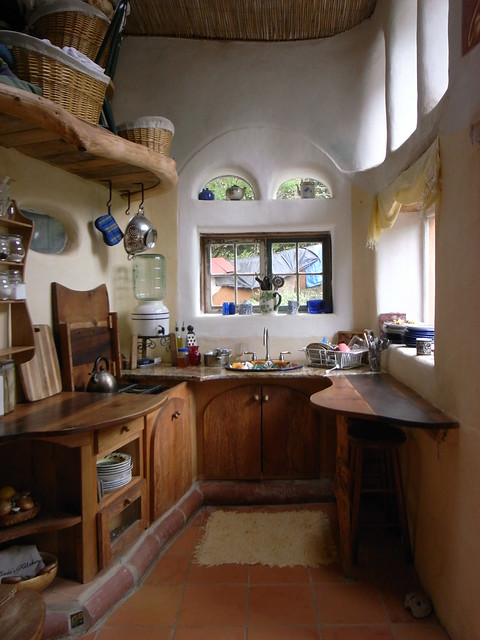
Photo shows a compact bespoke kitchen made out of natural wood with curved countertops. It has several windows and easy access. photo CCC Lindahouse
 
This is closely tied to the financial issues described earlier and therefore to issues of classism and social discrimination based on income, and in some cases to racism. The average Tiny Home dweller is not the same as the average person who lives in a merely small home. Exact figures on these demographics are very difficult to come by, it’s simply not something that is documented and there is no consensus on exactly what a small home is. In the US the demographics and tradition of trailer park residents suggest lower income people, those who would traditionally be considered lower or working class and, due to historic and systemic racial discrimination and town planning2 regulation, are likely to be of minority ethnicities3.

When espousing the right of people to be able to build and own their own homes, or to have access to not just affordable housing but also housing that is fit for purpose we need to be aware of who is able to access these new innovations and do our best to try and breakdown and overcome existing systemic persecution of those groups who have not been afforded the luxury of such housing including those on a low income and those from BAME communities. Part of this involves examining our existing attitudes toward those in small and low cost housing and how that compares to attitudes to Tiny Houses as well as doing what we can to ensure that our enthusiasm for Tiny Homes does not exclude the already excluded and perpetuate inequality.

Ready for the next instalment: read Part 3 here


1 for issues relating to the privilege of minimalism please refer to the Pratchet quote from Part 1 and consider how it is easy to get rid of possessions when you know you can afford to buy a new one should you need it).
2This excellent history of Suburbia from McMansion Hell blogger Kate Wagner gives some insight into mid century town planning in the US https://mcmansionhell.com/post/154653904191/a-pictorial-history-of-suburbia

3This wikipedia article on White Flight may shed some light. https://en.wikipedia.org/wiki/White_flight#Government-aided_white_flight

If you like my writing why not support me by Buy Me a Coffee at ko-fi.com

Friday, 21 June 2019

What should we ask about Tiny Homes - Part 1


Recently I’ve become somewhat obsessed by Tiny Homes and the Tiny Homes Movement and it’s got me thinking over some issues and asking a few questions.

First of all what are Tiny Homes and how is it a movement?


Tiny homes are exactly what they sound like, very small compact homes often under 37m^2 and generally made as temporary buildings or to be mobile.

The definition often includes converted vans and vehicles such as buses but crucially doesn’t include traditional commercial RVs, camper vans or caravans. The reason for that distinction is something I’ll get into later.

The Tiny House Movement is a term for the online and often international communities created to talk about and share ideas relating to tiny homes. There isn’t one firm fixed ethos or manifesto but shared goals and beliefs usually include some take on minimising footprint, being eco-friendly, downsizing, minimalism, and being rent or mortgage free as well as personal freedom. However the motivations for people deciding to live in a tiny home are as varied as the people who chose to do it. From retirees to hippies, young professionals to families, travellers (please note the lower case t here) to people looking to settle down: many people are drawn to the idea of tiny house living.

There are a multitude of websites forums, Facebook groups and YouTube videos dedicated to exploring the tiny home movement and tiny homes themselves. So if you would like to fall down that particular wormhole you won’t have to look hard.

There are many things I enjoy about tiny houses and the movement, I wouldn’t have fallen down the rabbit hole otherwise. The two big appeals for me are firstly that there is a lot of opportunity for being environmentally friendly and conscious and secondly that it provides an option outside of the standard model of the capitalist housing and rental economy. Additionally the opportunity for highly personalised customised spaces is very appealing: who doesn’t want to live in a bespoke crafted house?

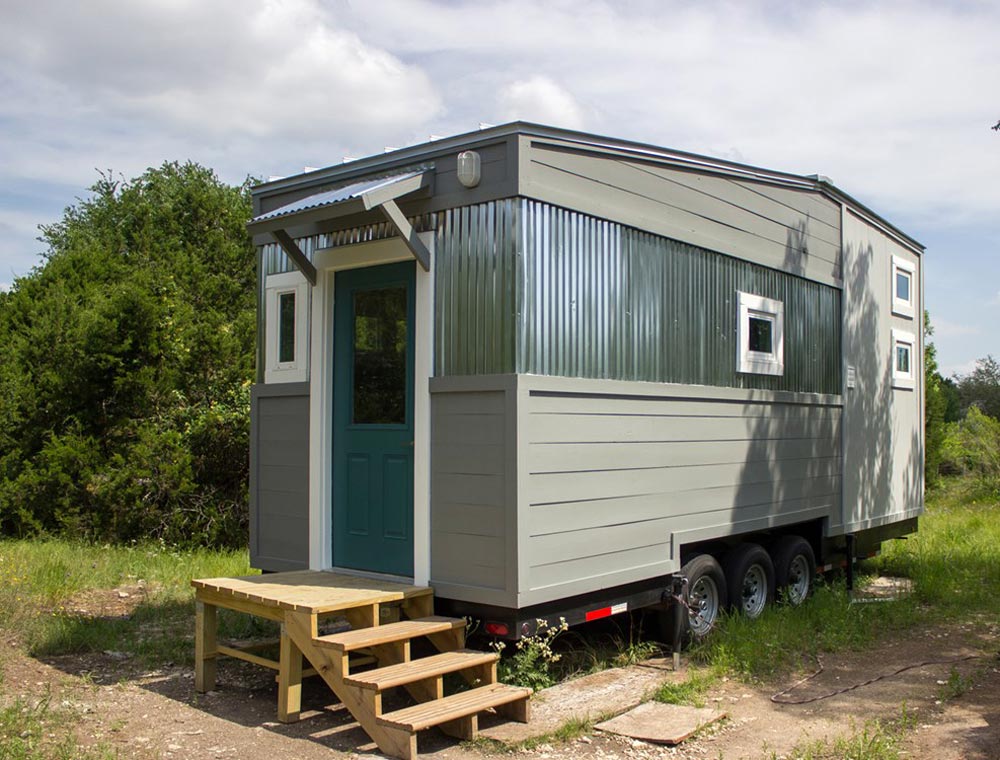
Image shows a small home on a trailer clad in grey panels. It has a teal green door and wooden set of external steps. From Reeds Road Home Design

The Housing Ladder Alternative


It’s the alternative to the prevailing housing market aspect that I want to tackle first, though. 

Undeniably for many people, the majority I would say in fact including those who are home owners, the current model for housing in the UK and other Western capitalist countries is difficult, expensive, and not fit for purpose. We devote a huge portion of our earnings to either paying a mortgage or rent. The cost of housing has shot up over the decades making living in some areas only accessible to the very wealthy unless you are willing to live in cramped squalor. Though they are slowly and not without a fight being improved, laws surrounding rental accommodation have long been in the favour of the landlords leaving renters in often precarious living situations and dealing with high rent and often very poor housing including damp, mould, structural safety issues, fire hazards and poor security. Though renting is seen as the norm and a perfectly reasonable living option in many countries, in the UK at least it is often treated as inferior to home ownership. Home ownership is seen as the goal and a sign of being a “responsible adult” however the cost of buying is now so high that many younger people (and for this article that’s pretty much anybody under 35) are unable to get onto the housing ladder without incurring significant debt or being fortunate enough to use equity from their parent’s home.

When finding somewhere safe comfortable, practical and above all affordable to live is so difficult it is no surprise that people start turning to alternatives and for them Tiny Homes may be the ideal solution. Now we get to the crux of the issue: Tiny Homes as a solution to high rents and a hostile housing market. But why is that a problem? Surely that’s to be celebrated and encouraged. I see it as only short term solution to a much larger problem and one that allows people to think we are addressing the housing crisis when all we are doing is affixing a sticking plaster.

Tiny houses are undoubtedly a good solution for individuals but they are not a solution to overcrowding and high costs of living. Tiny living spaces have been a feature of capitalist housing for centuries and while they do undoubtedly provide shelter for those in need (and who can pay) they don’t bring about any end to a hostile housing environment. Tiny Houses have the advantage that they are individually owned and therefore not contributing to (or minimally at least) the housing market. The issue of course is in this individuality that, with the exception of those who live in planned communities, the benefit of this new way of living is restricted to a few and doesn’t lead to systemic change. If anything it can serve to uphold the current system as those in power are able to point to those who “survive” in such tiny dwellings whilst continuing to pay rent or fees to management companies. It’s worth noting that blame for this shouldn’t be placed on the individual tenants who are simply doing the best they can.

It could be argued that those turning to Tiny Houses are undermining the traditional housing market, but it simply isn’t being done on a scale that has any real impact on the status quo. Instead of it being a solution that benefits many, it is the preserve of a few.

This leads nicely into my next point. As I said, Tiny Home owners often cite reducing housing costs or getting out of expensive housing markets as core motivations, and it’s indeed true that Tiny House living is often significantly cheaper than even small homes in the traditional housing market. However that doesn’t necessarily make them affordable. Some of you may be familiar with the “Sam Vimes “Boot” Theory of Economics” from author Terry Pratchett.


The reason that the rich were so rich, Vimes reasoned, was because they managed to spend less money.

Take boots, for example. He earned thirty-eight dollars a month plus allowances. A really good pair of leather boots cost fifty dollars. But an affordable pair of boots, which were sort of OK for a season or two and then leaked like hell when the cardboard gave out, cost about ten dollars. Those were the kind of boots Vimes always bought, and wore until the soles were so thin that he could tell where he was in Ankh-Morpork on a foggy night by the feel of the cobbles.

But the thing was that good boots lasted for years and years. A man who could afford fifty dollars had a pair of boots that'd still be keeping his feet dry in ten years' time, while the poor man who could only afford cheap boots would have spent a hundred dollars on boots in the same time and would still have wet feet.

This was the Captain Samuel Vimes 'Boots' theory of socioeconomic unfairness.


In the Tiny House movement it’s not to say that Tiny House owners are necessarily rich or wealthy, but like the person who can afford to pay for the good fifty dollar boots and have them last a lifetime, the Tiny Home owner has the money to invest in their new low cost living arrangement.

There are of course exceptions, but for the most part, Tiny Homes require you to be rich in either time or money, if not both. While £16,000 may be a tiny amount to pay to own your own home outright, it’s still a substantial amount of money for a person to have. Those built for that little often also rely on the ability of the home owner to dedicate time and effort to do much of the work themselves – a fully built Tiny House will cost upwards from £25000 in the UK. Less than a mortgage deposit perhaps but still not a small amount and one that many won’t have sitting in their banks. 

Additionally, whether going self built or pre-fab you need to have somewhere to live while it’s being made and before it’s on site, costing you rent or mortgage payments. Essentially you have to be able to afford standard housing before you can go Tiny. Then there are costs like having a suitable vehicle to tow with if you go for a mobile model, or the cost of transport for larger or shipping container style homes. You also need to consider location. You may be lucky and have access to rent free land but for most there will be some sort of land purchase or rental cost or weekly hire rates. 

Now think about the type of people who would really benefit from Tiny Houses: those who are low income and struggle with the traditional housing market: single parents, people who are unemployed, those who are currently homeless, disabled people and other low income groups. These are the people who are most negatively impacted by the high cost of living in many areas and who would benefit from genuine alternatives to the traditional housing market. They are also the same people who are least likely to be able to afford the initial costs of a Tiny House. If they don’t already have savings they may be able to get a loan, but only if a bank approves them and if they have a steady income that can take on the repayments. Paying back a loan while also paying for accommodation while your house is being built might be too steep for many and those who work full time just to afford that probably can’t afford the time off needed to self build, or they have other limitations such as disability or carer duties to restrict their ability to self build.

When these factors are considered we can see that while Tiny Homes are a low cost housing solution they are not necessarily affordable or accessible to those who are struggling with the traditional housing market.

This is Part One in a series of three on Tiny Homes. Read Part Two here. 


If you like my writing why not support me by Buy Me a Coffee at ko-fi.com

Thursday, 24 January 2019

They're here for your honey. But why?

As we are well into Veganuary some of you may be really settling in to this new way of eating and living whilst other’s may be struggling a bit. It certainly doesn’t help when there are dozens of blog articles, memes and twitter posts out there bashing veganism and vegans. Most difficult are those that frame it as genuine concern or outrage that people being vegan may not be in line with somebody else’s ethics or values, and those that cite concerns about the perils of veganism.

One such common concern is that vegans are using specialist ingredients or replacement ingredients that are some how leading to an environmental or ethical catastrophe.

Occasionally within these scare stories are valid concerns and slivers of truth, or at least questions that need asking – why are people suddenly buying quinoa when most of us had never heard of it before now, and half of us still can’t pronounce it. Why are will looking at alternatives to sugar like agave? 

Take honey for example


A constant source or criticism is that by giving up honey vegans are somehow entirely responsible for the death of bees and consequently will be the cause of famine and a worldwide catastrophe. Now, without getting into exactly why there are a lot of problems with these arguments about honey and bees, or addressing why this has become the go to straw man argument against vegans, I have another question: why is replacing honey such a big deal at all? 
photo showing a large fluffy pancake on a plate with slices of red apple and drizzled maple syrup. photo author's own

Perhaps I am the odd one out here, but thinking back to my pre-vegan days, I just didn’t use that much honey. I liked honey and would have it occasionally, but it wasn’t a staple of my diet. I didn’t go through jars of it each week. Cutting honey from my diet was a trivial matter and required almost zero changes to my eating and purchasing habits. The tiny changes I did have to make were because honey is sometimes used as a commercial “natural sweetener as a replacement for refined sugar. This mostly comes up when I am buying muesli. It’s really not a big deal.

Perhaps other people use honey far more frequently, but I do struggle to see why honey, and replacing honey is so talked about. So I had a think and looked into it a little and I think I have found some answers.

Firstly, the rise in veganism over the past 5 years or so has mirrored the rise in “healthy lifestyle” or “lifestyle” blogging, especially on platforms like Instagram. Health and diet fads are nothing new and have been around for centuries. Associating them with aspirational lifestyles and “good living” isn’t new either. The language may have changed but the message is still the same: eat the “right” things and you too can be beautiful, happy and virtually immortal for little effort.

Sugar, meaning refined sugar, has been declared not “healthy” and to be cut out of our diets. Therefore if we want sweet treats, and don’t we all, we must replace the sugar with something else. In non-vegan cooking – as well as commercial products as noted above- the obvious choice is honey. It is so pleasingly “natural” and has excellent marketing with pretty scenes of bees, flowers and old fashioned beehives.

What then for the vegan lifestyle bloggers, who must eschew sugar but also don’t want to eat honey? Well they must turn to alternatives such as agave nectar, date syrup, maple syrup and stevia. Of course many of these are also marketed as having “health benefits” because we can’t, in the blogging world, use an ingredient that isn’t “healthy”. There are trends, fads and “aesthetics” that must be followed if you want to be seen in this sphere. You then get secondary bloggers and Instagrammers who are using those ingredients because the blogs they follow and the people they see as icons or leaders in the field. (The proliferation of faux-science blogs, “nutritionists” with little to no qualifications, and those looking for “natural remedies” as opposed to chemicals or pharmaceuticals further supports these blogs and their choices.)

Secondly the majority of blogs and websites in the English speaking world also come from the US which has a different food culture to the UK. This is important when it comes to sugar and vegans. In the UK sugar is normally produced from sugar beet which is not refined using animal products. In the US however a lot of sugar comes from sugar cane, which is usually refined using bone char (literally the ashes of animal bones) and thus makes it not a vegan product. Mindful of this US vegans look for alternative sugar sources and, since honey is also not a vegan option, may turn to other plant derived sweeteners. However, due to the influence of and crossover with health bloggers some common sweeteners such as maple syrup or corn syrup are out of favour due to them not being considered “healthy”. That means that many American vegan food bloggers are drawn to previously uncommon syrups like agave.

Again, there is a trickle down effect where people may use the same ingredients as their peers and those they look up to without really questioning the why of it. 

Take time to reflect


If we start to look at our cooking and recipes a little closer we may wonder why some of these unusual ingredients are being used. Sometimes it is merely a point of geography. Why is this food blogger using agave nectar? Is it simply as a sweetener and are they from the US? In which case we, in the UK could use our regular sugar or even golden syrup if we wanted to retain the same moisture content. If it’s for health reasons and we feel strongly about not using refined sugar then perhaps we can stick with the agave or any other acceptable sweetener.

It may be the case in some recipes that we are using agave nectar to replace honey which itself was a replacement for refined sugar. In which case, why not just use sugar?

This momentary consideration can make our cooking a lot easier. It’s certainly not limited to honey and sugar substitutes either. There are similar questions to be asked about the use of coconut oil – why not regular vegetable oil or one of the many non-dairy margarines on the market in the UK. Again the answer is either due to somebody wanting it for the specific “health” benefits or because of the availability of non-dairy alternatives in the writer’s region. (occasionally it for specific flavour or a cooking property such as it’s melting point but if that’s the case it’s normally made clear in the recipe.) 

photograph showing two wooden box beehives in a garden setting. photo credit to Tangled Bank
But this still begs the question, who are the people using so much honey that they think a vegan choosing not to use honey will have a cataclysmic effect on the bee population? Are they even aware that there are more species of bee than the honey bee?

If you are vegan, don’t worry about not using honey, but do consider what ingredient you are replacing and why. If you aren’t vegan, just relax and look at the bigger picture – it’s not always about honey.

If you like what I write consider leaving me a tip buy donating via ko-fi.com/axesnyarn

Thursday, 1 November 2018

Let's talk about death

It being Halloween, All Hallows Eve, Samhain, Dia de los Muertos and so on, this seems like a good time to have a conversation about death and dying.

No, not the horrors of death, undead corpses walking around and spooky ghosts, but the actual realities of death and dying. For many people of different faiths and cultures, Halloween is more than an opportunity for costumes and scary films, it is a time where we consider grief and loss. There are often remembrances for the dead or the opportunity to accept loss and grieving and to move on. This ritual of being at peace with death and loss doesn't have to stop at others, it can extend to yourself too. Often this is metaphorical - saying goodbye to difficult circumstances or grieving a loss of self due to illness.
But maybe it can be more practical too. One of the many ways we can be more at peace with the concept of death in general and our own deaths in particular is toactually take time to think about what happens at the time. This doesn't just mean spiritual beliefs about the afterlife or what happens to a persons soul or spirit but can and should include practical considerations about how you physically want your death handled.

Ideally by considering these things and being open with loved ones about your own wishes you can encourage others to open up and talk about their wishes. While the thought of a loved one dying might be filled with sadness and fear, knowing what their beliefs are and what their wishes are can help to bring us to terms with their death (long) before the fateful day. If the only benefit is not having to worry about guessing at their wishes and making the practical aspect easier, that's still a weight off the shoulders of a grieving person.

In the therapy practice DBT this would probably be counted as the "coping ahead" skill in which a person visualises and works through a potentially distressing event in advance in order to lessen the impact of future feelings and to understand and cope with things which may be difficult.

But starting those conversations can be difficult. So let me go first.

I don't know what I believe about the afterlife. I am open to the concept of spiritual afterlives such as some non-Christian version of heaven. I don't really believe in reincarnation and I don't really believe in ghosts and the spirits of the dead haunting the living plane. I also don't believe that what you do to the body of the deceased impacts on any potential afterlife.

That doesn't mean I don't care what happens to my body. I actually do. I live my life in a manner which tries to be as environmentally friendly as possible within my circumstances and I would like that to be taken into account with what could be called my final act.

Ideally I would like to donate my body to medical science. I am also a registered organ donor. The process of donating your body to science happens long before you die. You have to submit a form or request to your chosen university of medicine giving your explicit consent while you are alive. It's not possible in most circumstances for somebody else to consent on your behalf after you have passed. If this is something you want then the earlier you arrange it the better. If you are in the UK can read the information on the Human Tissue Authority website. You will have to identify your local facility and contact them individually. I will be submitting a form to Leeds University as that is my local university. Should I move out of their "catchment area" then I will have to submit a form to whatever is the closest medical university there.
However, I also stated that I am an organ donor. Unfortunately this can be incompatible with donating your body to science. Medical researchers generally want whole bodies, so if your organs are donated after your death then the research institute may not be able to accept your body. There are other reasons they may not be able to take your body including some causes of death - each university has guidelines on what they can and can't accept. For this reason it's best not to leave your wishes at simply "donating to science".

image description: picture of a body wrapped in an unbleached linen shroud with yellow primroses resting on a wicker pallet. image from Respect Everybody Shrouds

I need a back up plan should my body not be accepted. For me there are a few considerations.
I specifically do not want to be embalmed and given a traditional British burial: the whole casket, 6ft down in a grave liner thing is not for me. It's too unnatural and too steeped in Christian traditions for me to be comfortable with. Embalming is also pretty nasty stuff. Sure I'll be dead and formaldehyde isn't going to harm me but it is a carcinogenic and there is the potential for harm to embalmers and also to wildlife and plant life should that fluid seep into the earth. Even worse, there have been cases of flooding in cemeteries which have washed that formaldehyde into our general water supply. Let's not do that.
So if I am to be buried I want it to be a natural burial without embalming and preferably in a shroud (I'm not going to lie if there is an eco friendly black option available, I'd love it) or all natural casket rather than the traditional big wooden box with all the fancy bits. This is usually called a Natural Burial or a Green Burial.


The other option I'd be interested in is sadly not licensed in the UK, but if it does become available before my death then it's super cool. It's called Alkaline Hydrolysis but is sometimes called "water cremation" or resomation. It's a process of essentially dissolving the body in an alkaline solution and then filtering the water. It's way more environmentally friendly than traditional cremation, though as it's less understood people are nervous about the thought of water filled with human remains. In reality this is cleaner than the smoke and vapour filled with human remains that gets pumped out of a crematory. My hope is that as it's talked about more people will become more comfortable with it and it will become legal in the UK. To be honest part of me likes this option because it has a slightly sci-fi feel to it.

image description: diagram of how an alkaline hydrolysis machine works showing a body in a cylindrical chamber. diagram from the BBC article "Dissolving the Dead"


And that's it. I have no specific wishes or requirements about funerals, wakes or memorials. I don't think that's up to me. That's something that is important to the living and I am happy to leave it to them to choose something that works for them and their grieving process. My concern is that my body is treated in a way that reflects my values. I would like my loved ones to know and be aware that they can be a part of this process if they want to be - if they want to prepare the body or be there at the burial or water cremation,  if they want a body that can be viewed. I want them to know that they have rights and some measure of control over how they mourn and deal with this event. It doesn't have to be completely taken out of their hands by a formal and clinical funeral home unless that's what they want. And a wake or memorial service can take place at any point and in any place they see fitting. That's ok with me.

I hope this helps you think about your own death in more positive or at least pragmatic terms. Let's start having these conversations and making death a less scary and incomprehensible thing.
There will always be sadness and grief around death and that's ok. But we don't have to make it harder on ourselves if we don't have to.