Showing posts with label capitalism. Show all posts

Friday, 5 July 2019

What should we ask about Tiny Homes - Part 3


The final part in a series looking at issues in the Tiny House movement. You can read Part 1 here and Part 2 here.

After exploring the issues of classism and financial accessibility as well as the difference between a small home and a Tiny Home, in this final chapter in the series, we will take a look at accessibility. 

Are Tiny Homes really for all?


Of course on this blog I will consider accessibility, how could I not? On first appearances, Tiny Homes may be a good accessible alternative and for some they certainly are: the small space puts everything close to hand and the home owner doesn’t need to worry about maintaining and looking after a large residence. Additionally the portable nature of the traditional Tiny Home means that they can be located in a place that is convenient and beneficial to the owner – close to relatives or amenities for example, or even in the back garden of a relative. We are also used to the concept of disabled people or those with particular adaptations living in smaller units - whether for their own benefit or somebody else’s – as in the case of retirement units and sheltered accommodation so the idea of “putting” disabled people in affordable Tiny Homes may not be that alien. The reality however is that Tiny Homes are often far from accessible and worse, the Tiny Home Movement can have a latent thread of disableism running through it’s rhetoric.

Though not at the core of it, the Tiny House Movement is very much about aspirational lifestyle and reflects aspects of health and well-being trends which can includes things such as “healthy” eating, being active and the firm belief (divorced from any spiritual roots) that yoga can cure all. A common feature of Tiny Homes is that the sleeping area is in an elevated loft space that must be accessed by some step or ladder arrangement. This itself presents an obvious accessibility hurdle but this is further exaggerated by those living in tiny homes who often talk of it as a way of keeping fit or staying lithe into old age. As is common in many other areas of our society the idea that we may become ill or disabled at any point is one people simply don’t contemplate. There are, thankfully, an increasing number of designs which have ground level beds or beds that fold or slide out of craftily hidden nooks. Certainly the opportunity for customisation and bespoke building does mean that there is room for innovation and the opportunity for accessible small space beds, but it isn’t currently the norm.
Pauline Sugarman's clever design with a slide away bed.

When pulled out the bed blocks access to other features
That need for space saving and clever storage is wonderful and from a design point of view something I love. However in terms of accessibility it’s not always great. While from a design point of view I love beds which magically appear out from under a sofa or fold down from a wall, the reality is that you can only use the space for one thing at a time: it is either bedroom or living room (or office or whatever the designated usage is). If you want to move from the bedroom to a sitting room or a craft space you have to get out of bed, tidy all your bedding away and physically move the bed to access your other space. The reverse may be even more difficult: imagine being somebody with a chronic illness who needs to lie down after being sat working for a short while. They need to tidy their office/craft/leisure activity away safely and securely, possibly move a piece of furniture or two and then assemble/reveal/lower the bed and adjust or add bedding before being able to get into it. That’s an awful lot to ask of somebody with limited capability. 

From my own point of view there would be a couple of unexpected challenges to living in a Tiny House, and they are both to do with laundry. Many Tiny Houses are designed without space for a washing machine or any drying space. For many this is a reasonable decision - they have access to laundry facilities on their parking site or are able to take their laundry to a launderette (or in one case were able and content to wash their clothes in a pot over an open fire outside). This is absolutely fine if it is something you can do. But it's not something I can do, I need a washing machine in easy reach and I need the space to be able to dry things or an efficient washer-dryer combo that can operate off of whatever electrical power supply I have. Additionally though, I need a lot of clothes. No this isn't just me justifying owning a lot of clothes it's actually a great adaptation for disabled people. If you don't have the energy to do a load of laundry you still need to have clean clothes to wear. So you need enough options to have stuff waiting to be washed and ready to wear. But that takes up space and means the common Tiny House lifestyle hack of downsizing a wardrobe or utilising a "capsule wardrobe" just isn't feasible. With these extra space needs a Tiny House may just not suite some disabled people. 

Think also of getting in to a Tiny Home – most are raised on trailers or on a temporary foundation and require a set of steps to get in to. Obviously there is an accessibility issue right away. Foldable stowable or temporary ramps do of course exist and there are a smattering of ramped homes out there, even some with pneumatic platforms, but they come at a premium price and are difficult design elements to add. We don’t just have to consider their suitability for use but also how durable they are, how much space they take up and if they can easily be removed or stowed for travel (or to comply with “temporary dwelling” regulations). How inclusive are Tiny Houses when people simply can’t get into them and how revolutionary is that compared to the standard and inaccessible housing model. Once inside how do you move around. Small spaces are difficult for people with wheelchairs (manual or electric) as well as for those with crutches or canes and visibility issues – how do you navigate your own tiny home. The plus side of course is that you don’t have to go very far to get to anything and it would be plausible to fit in easy to reach grab rails throughout!

Not strictly a Tiny House this "outbuilding" features a rare ramp. Bungalito by John Hindman

We need more creativity


It’s not that some solutions don’t exist and of course not all disabilities and their needs are the same, but the prevailing thinking in Tiny Home design isn’t one that has yet embraces accessibility needs or the full potential of bespoke home design.

And that really is at the crux of the issues I see in the Tiny Homes movement. We have something that could potentially be revolutionary in a number of ways but, as long as the prevailing thinking stays influenced by current housing standards and trends, it will never reach it’s potential. In order to actually serve as a revolutionary, accessible and truly inclusive form of housing it has to break free of the systemic forms of oppression and discrimination that foster our current housing inequality.


If you like my writing why not support me by Buy Me a Coffee at ko-fi.com

Friday, 28 June 2019

What should we ask about tiny homes - Part 2


Part 2 of 3 in a series looking at issues in the Tiny House movement. You can read Part 1 here.

Last week we looked at how the cost of Tiny Houses wasn't always as low as you'd think and how it didn't necessarily break the traditional mould of housing. This week we are going to take that a step further as we consider what makes a Tiny Home a Tiny Home. 

Tiny or merely small

look at the cost of Tiny Homes in terms of people who already live in low cost and often small accommodation, be it rented or owned. Why is it that Tiny Homes are celebrated, given YouTube channels and the prestige of capitalisation whilst simply living in a small home is not. Small houses are far from being unusual with a two bedroom terrace being around 164m^2 or less and the average apartment or flat being smaller still. Though not common in the UK, trailer homes and trailer parks are a ubiquitous feature of the US housing market and landscape. Trailers, similar to a static caravan for those in the UK, are around 148.5m^2 so clearly a small living space.

Photo taken from RightMove.co.uk. image shows a small but tidy kitchen viewed from the doorway. It is not much wider than the doorway.

Certainly there is no glamour in the UK to living in a small house, and certainly not when you are renting a back-to-back or a council flat in an impoverished area. Similarly, trailers and trailer parks in the US garner a lot of stigma, neatly summed up in the common insult “trailer trash” - people who dwell in trailers are often stereotyped as being rough, common and of low intelligence. Nothing like the praise, prestige and compliments given to those who live in a tiny home. Those who live in a house with a kitchen so small you can’t open a cupboard and the fridge at the same time (or indeed can’t even fit the fridge in the kitchen) tend to “make do” to struggle and to put up with these difficult spaces, where as those with Tiny House kitchens often marvel at the ingenuity, how little space they actually need and the easiness with which they can use the space. 

Tiny House living is often described in terms of comfort, ease, ingenuity and enjoyment of “the simple life”1, concepts which may not be familiar to those of us who live or who have lived in something which is simply considered “a small house”. Part of this difference in attitude is due to how Tiny Houses come to exist and the place they hold in our housing culture. Tiny Houses are deliberate and considered. They are self build projects wither entirely built by the people living in them or with a lot of input from the owners to the designers and manufacturers. Like other self build projects they are bespoke, tailored to the owners needs and can involve non-standard features that make use easier. They are also intentional in terms of a person’s desire to live in a Tiny House – they have chosen to downsize or live “more simply” or have lifestyles and needs that work with a Tiny Home. Compare this to a family or person who is forced into a small home due to economic and sociopolitical circumstances and may not have a lifestyle or personality that is well adapted to a small and ill-fitting space. It is far easier to live in a small space that meets your specific needs than it is attempting to adapt your needs to an existing and fixed design – especially when that design may have come about over a century earlier and without any idea what the needs of a 2019 family may be.

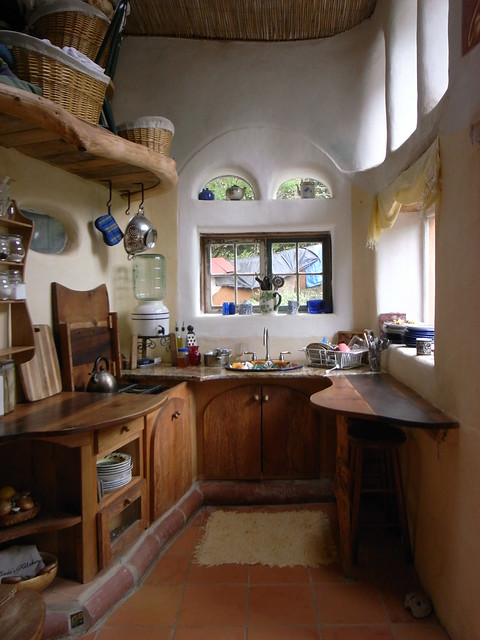
Photo shows a compact bespoke kitchen made out of natural wood with curved countertops. It has several windows and easy access. photo CCC Lindahouse
 
This is closely tied to the financial issues described earlier and therefore to issues of classism and social discrimination based on income, and in some cases to racism. The average Tiny Home dweller is not the same as the average person who lives in a merely small home. Exact figures on these demographics are very difficult to come by, it’s simply not something that is documented and there is no consensus on exactly what a small home is. In the US the demographics and tradition of trailer park residents suggest lower income people, those who would traditionally be considered lower or working class and, due to historic and systemic racial discrimination and town planning2 regulation, are likely to be of minority ethnicities3.

When espousing the right of people to be able to build and own their own homes, or to have access to not just affordable housing but also housing that is fit for purpose we need to be aware of who is able to access these new innovations and do our best to try and breakdown and overcome existing systemic persecution of those groups who have not been afforded the luxury of such housing including those on a low income and those from BAME communities. Part of this involves examining our existing attitudes toward those in small and low cost housing and how that compares to attitudes to Tiny Houses as well as doing what we can to ensure that our enthusiasm for Tiny Homes does not exclude the already excluded and perpetuate inequality.

Ready for the next instalment: read Part 3 here


1 for issues relating to the privilege of minimalism please refer to the Pratchet quote from Part 1 and consider how it is easy to get rid of possessions when you know you can afford to buy a new one should you need it).
2This excellent history of Suburbia from McMansion Hell blogger Kate Wagner gives some insight into mid century town planning in the US https://mcmansionhell.com/post/154653904191/a-pictorial-history-of-suburbia

3This wikipedia article on White Flight may shed some light. https://en.wikipedia.org/wiki/White_flight#Government-aided_white_flight

If you like my writing why not support me by Buy Me a Coffee at ko-fi.com

Friday, 21 June 2019

What should we ask about Tiny Homes - Part 1


Recently I’ve become somewhat obsessed by Tiny Homes and the Tiny Homes Movement and it’s got me thinking over some issues and asking a few questions.

First of all what are Tiny Homes and how is it a movement?


Tiny homes are exactly what they sound like, very small compact homes often under 37m^2 and generally made as temporary buildings or to be mobile.

The definition often includes converted vans and vehicles such as buses but crucially doesn’t include traditional commercial RVs, camper vans or caravans. The reason for that distinction is something I’ll get into later.

The Tiny House Movement is a term for the online and often international communities created to talk about and share ideas relating to tiny homes. There isn’t one firm fixed ethos or manifesto but shared goals and beliefs usually include some take on minimising footprint, being eco-friendly, downsizing, minimalism, and being rent or mortgage free as well as personal freedom. However the motivations for people deciding to live in a tiny home are as varied as the people who chose to do it. From retirees to hippies, young professionals to families, travellers (please note the lower case t here) to people looking to settle down: many people are drawn to the idea of tiny house living.

There are a multitude of websites forums, Facebook groups and YouTube videos dedicated to exploring the tiny home movement and tiny homes themselves. So if you would like to fall down that particular wormhole you won’t have to look hard.

There are many things I enjoy about tiny houses and the movement, I wouldn’t have fallen down the rabbit hole otherwise. The two big appeals for me are firstly that there is a lot of opportunity for being environmentally friendly and conscious and secondly that it provides an option outside of the standard model of the capitalist housing and rental economy. Additionally the opportunity for highly personalised customised spaces is very appealing: who doesn’t want to live in a bespoke crafted house?

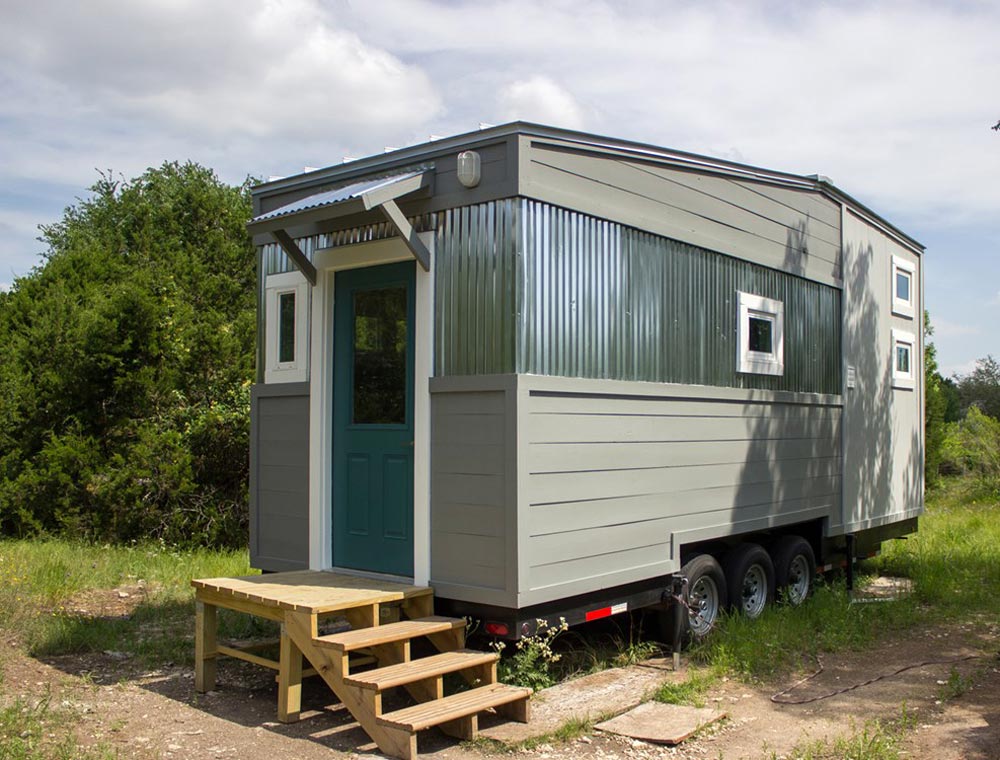
Image shows a small home on a trailer clad in grey panels. It has a teal green door and wooden set of external steps. From Reeds Road Home Design

The Housing Ladder Alternative


It’s the alternative to the prevailing housing market aspect that I want to tackle first, though. 

Undeniably for many people, the majority I would say in fact including those who are home owners, the current model for housing in the UK and other Western capitalist countries is difficult, expensive, and not fit for purpose. We devote a huge portion of our earnings to either paying a mortgage or rent. The cost of housing has shot up over the decades making living in some areas only accessible to the very wealthy unless you are willing to live in cramped squalor. Though they are slowly and not without a fight being improved, laws surrounding rental accommodation have long been in the favour of the landlords leaving renters in often precarious living situations and dealing with high rent and often very poor housing including damp, mould, structural safety issues, fire hazards and poor security. Though renting is seen as the norm and a perfectly reasonable living option in many countries, in the UK at least it is often treated as inferior to home ownership. Home ownership is seen as the goal and a sign of being a “responsible adult” however the cost of buying is now so high that many younger people (and for this article that’s pretty much anybody under 35) are unable to get onto the housing ladder without incurring significant debt or being fortunate enough to use equity from their parent’s home.

When finding somewhere safe comfortable, practical and above all affordable to live is so difficult it is no surprise that people start turning to alternatives and for them Tiny Homes may be the ideal solution. Now we get to the crux of the issue: Tiny Homes as a solution to high rents and a hostile housing market. But why is that a problem? Surely that’s to be celebrated and encouraged. I see it as only short term solution to a much larger problem and one that allows people to think we are addressing the housing crisis when all we are doing is affixing a sticking plaster.

Tiny houses are undoubtedly a good solution for individuals but they are not a solution to overcrowding and high costs of living. Tiny living spaces have been a feature of capitalist housing for centuries and while they do undoubtedly provide shelter for those in need (and who can pay) they don’t bring about any end to a hostile housing environment. Tiny Houses have the advantage that they are individually owned and therefore not contributing to (or minimally at least) the housing market. The issue of course is in this individuality that, with the exception of those who live in planned communities, the benefit of this new way of living is restricted to a few and doesn’t lead to systemic change. If anything it can serve to uphold the current system as those in power are able to point to those who “survive” in such tiny dwellings whilst continuing to pay rent or fees to management companies. It’s worth noting that blame for this shouldn’t be placed on the individual tenants who are simply doing the best they can.

It could be argued that those turning to Tiny Houses are undermining the traditional housing market, but it simply isn’t being done on a scale that has any real impact on the status quo. Instead of it being a solution that benefits many, it is the preserve of a few.

This leads nicely into my next point. As I said, Tiny Home owners often cite reducing housing costs or getting out of expensive housing markets as core motivations, and it’s indeed true that Tiny House living is often significantly cheaper than even small homes in the traditional housing market. However that doesn’t necessarily make them affordable. Some of you may be familiar with the “Sam Vimes “Boot” Theory of Economics” from author Terry Pratchett.


The reason that the rich were so rich, Vimes reasoned, was because they managed to spend less money.

Take boots, for example. He earned thirty-eight dollars a month plus allowances. A really good pair of leather boots cost fifty dollars. But an affordable pair of boots, which were sort of OK for a season or two and then leaked like hell when the cardboard gave out, cost about ten dollars. Those were the kind of boots Vimes always bought, and wore until the soles were so thin that he could tell where he was in Ankh-Morpork on a foggy night by the feel of the cobbles.

But the thing was that good boots lasted for years and years. A man who could afford fifty dollars had a pair of boots that'd still be keeping his feet dry in ten years' time, while the poor man who could only afford cheap boots would have spent a hundred dollars on boots in the same time and would still have wet feet.

This was the Captain Samuel Vimes 'Boots' theory of socioeconomic unfairness.


In the Tiny House movement it’s not to say that Tiny House owners are necessarily rich or wealthy, but like the person who can afford to pay for the good fifty dollar boots and have them last a lifetime, the Tiny Home owner has the money to invest in their new low cost living arrangement.

There are of course exceptions, but for the most part, Tiny Homes require you to be rich in either time or money, if not both. While £16,000 may be a tiny amount to pay to own your own home outright, it’s still a substantial amount of money for a person to have. Those built for that little often also rely on the ability of the home owner to dedicate time and effort to do much of the work themselves – a fully built Tiny House will cost upwards from £25000 in the UK. Less than a mortgage deposit perhaps but still not a small amount and one that many won’t have sitting in their banks. 

Additionally, whether going self built or pre-fab you need to have somewhere to live while it’s being made and before it’s on site, costing you rent or mortgage payments. Essentially you have to be able to afford standard housing before you can go Tiny. Then there are costs like having a suitable vehicle to tow with if you go for a mobile model, or the cost of transport for larger or shipping container style homes. You also need to consider location. You may be lucky and have access to rent free land but for most there will be some sort of land purchase or rental cost or weekly hire rates. 

Now think about the type of people who would really benefit from Tiny Houses: those who are low income and struggle with the traditional housing market: single parents, people who are unemployed, those who are currently homeless, disabled people and other low income groups. These are the people who are most negatively impacted by the high cost of living in many areas and who would benefit from genuine alternatives to the traditional housing market. They are also the same people who are least likely to be able to afford the initial costs of a Tiny House. If they don’t already have savings they may be able to get a loan, but only if a bank approves them and if they have a steady income that can take on the repayments. Paying back a loan while also paying for accommodation while your house is being built might be too steep for many and those who work full time just to afford that probably can’t afford the time off needed to self build, or they have other limitations such as disability or carer duties to restrict their ability to self build.

When these factors are considered we can see that while Tiny Homes are a low cost housing solution they are not necessarily affordable or accessible to those who are struggling with the traditional housing market.

This is Part One in a series of three on Tiny Homes. Read Part Two here. 


If you like my writing why not support me by Buy Me a Coffee at ko-fi.com

Thursday, 11 October 2018

Reconsidering the "Walkable City"


Based on previous posts (and chatter on facebook if you follow me there) you may be aware that I am interested in the concept of solarpunk and future cities. For those not initiated to the idea of solarpunk it is the concept of a better society that is built using modern (or future) science and is harmonious with the environment and with the people who live in it. If you read my post on Wakanda you will know my delight about a city that is not only environmentally sound, scientifically advanced but also people friendly and accessible and that’s a big deal.

The concept of walkable cities then, surely that fits into my solar punk future science ideal? Well yes and no. A recent article from the Guardian inadvertently provides the perfect example of this. The article itself is well written and well sourced with examples of a number of cities and studies but really the first indication of an issue is the title “a walkable city”. This name itself discounts large proportions of the population who can’t walk at all or easily. You could argue that the title isn’t specific but instead is referring to a concept. However the wording, as innocent it may be, directs people’s thoughts to walking and overlooking those that can’t walk.

A walkable city isn’t always about places being totally pedestrianised but the aim is for pedestrians to take priority and to be safe navigating on foot. The benefits are undoubted - lower levels of pollution, less collisions and accidents, better footfall and sales especially for small businesses. These are undoubtedly good things as is encouraging those who are able to to walk a little more to get more fresh air and be more active. But a potential benefit that is ignored is allowing disabled people to be more independent as well.

The article cites a number of cities and projects and the approaches they have taken. In London they have been using cameras and software to track the movement of cars, pedestrians and cyclists in order to determine the most efficient routes and road layouts to encourage more pedestrians. In Auckland the council have taken steps to make areas more “pedestrian friendly” by adding more trees and benches and removing car parking. Greater Manchester are creating “beelines” a joined up system of paths and cycle routes across their city to aid people walking from place to place and reducing the reliance on cars.

What is missing from all of these projects are considerations or even an acknowledgement of disabled people and the needs they may have or how their experiences may impact what counts as a “walkable” city.

Tracking footfall, bicycles and cars is a useful and important project and will certainly provide important information, however it only leads to an accessible city if those various pathways are wide enough for pedestrians and power chair or mobility scooter users. Trees and benches are great, especially providing seating for those who fatigue easily, but they must be placed in such a way that they don’t provide impediments to those who are blind or partially cited, and leave room for walking and chair based pedestrians alike to use the paths concurrently. Likewise for cycle and footpaths that span cities.
Creating pedestrian zones that allow easy walking is a wonderful idea but we also must recognise that walking across a city centre, even a walk of only a few hundred yards is impossible for some people. There still needs to be adequate disabled parking - and for there to be a cultural shift which doesn’t restrict them to only those who have been granted a Blue Badge (Blue Badges are often awarded based on your PIP award, since not everybody is awarded PIP no matter how high the need, this means people who need the badges may not have them).

But it goes even beyond that. According to some metrics York would be considered a “walkable city” by many. Much of the city centre is pedestrianised with limited traffic flow and priority given to pedestrians. This encourages a high percentage of thriving independent businesses. Anybody with mobility or other access issues would be quick to point out though, that it is most definitely not an accessible city. The streets are narrow and crowded, they are winding and uneven: a mix of narrow kerbs, cobbles, paving stones, sign-posts, bike racks and more. Getting around on foot with mobility issues is difficult: getting around in a chair is prohibitive. That’s even without addressing things like noise and visibility or the additional barrier of steps into buildings. A walkable city is not an accessible city and it’s very easy to end up with one at the cost of the other.

What frustrates me most about this article is how many of the project authors have been keen to consider inclusivity, for example Action Aid’s app and program to allow people to document streets and buildings they feel safe or unsafe in (and then hopefully passing that on to organisations that can make improvements). It quotes Susan Claris of Arup as saying “[a] huge indicator of a civilised walkable city” is safe public toilets. Clearly some thought and care is going into these studies. But what of people who don’t have access to a public toilet at all, safe or otherwise? Of the many public facilities across the UK (including over 4000 council run toilets) only a fraction of those are labelled accessible, fewer still are actually accessible (it’s not accessible if it’s also your storeroom) and even less are rated by Changing Spaces as suitable for an adult who needs a carer. In these pedestrianised walkable cities in which people aren’t able to dive into their car and speed home if caught short accessible toilets absolutely should be a priority.

Even worse in my eyes is that the article cites the “double buggy” test, being used by the Manchester project to determine if paths are wide enough that somebody could get a double pram down. That is important: parents and pushchairs should be thought about (and let’s not forget many of those parents may be disabled in someway themselves - using a double buggy instead of carrying a child may even be an accessibility adaptation for them) and it inadvertently helps disabled people - if a double buggy can get through so can the majority of mobility scooters, manual and power chairs. But nobody likes being an inadvertent afterthought, or in this case possibly not even an afterthought since we aren’t afforded the column inches by the journalist. It is significant because it would imply that the needs of disabled people aren’t being considered in these plans at all. If a double buggy can get down a path then yes a chair can too. But whereas a parent may be able to push a chair up or down a kerb, and over uneven surfaces or around awkwardly placed signs, a person in a power chair may not be able to and that’s just not a concern for these project builders.

Disabled people already struggle with getting out and about. But their absence from everyday public view on the streets of our cities isn’t because we don’t want to be there, it’s because of the barriers architects, councils, town planners and engineers have put in our way. The reason so many visionaries of future cities seem to have forgotten about us is because we are already kept out of site and out of mind by the societies we live in. Creating a fresh new walkable city or a city of the future is an admirable goal but if you look at your artists impressions and computer simulations and all you see are non-disabled people then you’ve gone wrong. You have neglected and discriminated against a large group of people who have every right to enjoy the businesses, places of work and attractions of a city with the same ease, safety and comfort as any other citizen disabled or not. That shouldn’t be forgotten about and it shouldn’t be reduced to an afterthought.

Truly revolutionary design and development comes by considering all the people who will be using your creation. Truly functional design that stands the test of time is something that can be embraced by the whole population and is fit for purpose, avoiding the need for decades of patching and re-engineering. That absolutely means considering the needs of everybody including disabled people.

So what of my shiny solarpunk dream cities? Would they be “walkable”? No. They would be accessible. Accessible to all who need to be there. For many that will mean safe and easy walking for others that will mean spaces and access routes for personal vehicles (electric and self driving of course, this is my dream after all). Streets that can be navigated with ease, clear road signs with braille or audio that can be picked up by a user’s app. Plenty of seating, and yes, good clean accessible toilets. Designated cycle lanes that don’t encroach on pedestrian space. Charging points for electric chairs and scooters. Smooth surfaces and ramps between different levels. Good lighting (reactive for energy efficiency and to reduce light pollution). Options and services for those people who need help carrying things (drones maybe?). Good public transport with easy access points and methods for getting into the centre of “pedestrian” spaces.

Yes some of these are out of our reach right now but many of them aren’t are are what I would think of as basic and minimal changes to a city to make it both accessible and pedestrian friendly. If the money can be spent on these existing projects then it can be spent on improving accessibility.

I don’t want to see any more think pieces on walkable cities. I want to see think pieces on accessible and inclusive cities. I don’t want to be erased from a future that hasn’t happened yet.

Amazingly, the Guardian has written on this subject themselves with an article called "What would a truly accessible city look like" from February 2018. They just must have forgotten about it. 

Friday, 24 August 2018

Caring is not a heroic task

I am having lots of thoughts and feelings about what happened yesterday that I need to get out. So long post warning. (CN: seizures, drug and alcohol use, homelessness and related issues)

What happened

I was walking along a pretty busy street (Boar Lane) in Leeds heading to get a bus. Just off the pain pavement I saw a guy start to have pretty severe convulsions. It was distinctly not somebody wobbling and stumbling as if drunk. He was still mostly upright at that point but was starting to sag. I went over to help him - he appeared to be unconscious and seizing. I got my arms around him to stop him falling but couldn't lower him to the ground by myself as a fully grown unconscious person is difficult to manoeuvre. I called for help and a man and woman came over to me. The man called for an ambulance and the woman helped me lower the patient to the ground. He was still seizing but we got him into the recovery position. Eventually the convulsions stopped but he remained unconscious. his pulse was weak and his breathing irregular to start with though it did steady eventually.

We stayed like that for 45 minutes waiting for an ambulance monitoring his heart rate and breathing.

During that time three people stopped to see if wee needed help, two security guards asked if we needed him moving, a pair of Leeds BID asked us what he'd taken and and, group of kids stood and watched and told us we were idiots for helping him.

Also a group of homeless guys came over to see what was happening, managed to give us his name, informed us that he suffers from seizures but he'd been using spice so he was just sleeping and then left.

After 45 minutes the guy woke up confused and a little belligerent. I managed to talk to him for a few minutes but we couldn't keep him there and he left. He told us he had been smoking spice not long before it happened. He left to go and smoke more.

The aftermath

So last night and today I felt like crap. Part of me is so angry at all the people who walk past and stare and do nothing. I guess when it's fairly obvious that first aid is happening and somebody is on a phone you don't need to stop because it's under control. But at the point where i was one small person with a walking stick trying to hold on to a fully grown convulsing man how many just ignored it. The people who did help were lovely. They weren't local and were having a short break in Leeds this was their first day.

What's worse though are those who said we shouldn't help. The people who are happy to ignore somebody in distress because they look homeless. From the distance I was at when he started convulsing I could see no indication he was homeless or a euphemistically named "street drinker". I wasn't even sure when I literally had my arms around him with him leaning his full weight on me. I wasn't sure when he was on the ground (though I had a fair idea at that point) and saw the dirt and the purple ears and the abrasions and other signs of spending your days and nights on a street. I was only sure when the other local homeless people came and told us.

But even then why does his status as homeless or a drug user make him less worthy of help?

Several people said "oh it's just spice." or some variant on that. But it doesn't matter. he had a seizure. Maybe if he was just asleep it wouldn't matter, it would be "just spice" but he had a seizure. That's not normal. That's not good. OK using spice isn't exactly good for you and but neither is sleeping rough. But that doesn't make having a seizure any less of a medical red flag or to be taken any less seriously.

I was particularly angry at the Leeds BID (Business Improvement District) reps who walked up and the first thing they said was "what has he taken?". No concern for his welfare. No concern for our welfare. Just an assumption and a judgement that he had taken sometihng. At that point we didn't know anyway. When we responded with "maybe nothing, he had a seizure" they just walked away.

Since they first appeared I have had a strong distrust of Leeds BID and their bowler hatted reps. Their purpose is to make Leeds attractive to investors and business. Their methodology is to remove anything on the street that isn't aesthetically pleasing or is in someway distasteful or a nuisance. They make me think (not helped by their uniforms) of some sort of Nazi era brigade charged with ridding our city of the unclean and unwanted, those who are a stain on their plans of creating a capitalist utopia. I don't believe they have any real power to move or harass homeless people but they do. I have a horrible nagging suspicion that they would deploy the same tactics on disabled people if they could especially those who use chairs and scooters and don't look "inspiring" enough.

Image shows three people wearing matching Leeds BID uniforms of white shirt, black skirt or trousers, black waistcoat, yellow tie and a black bowler hat with a yellow band. The are stood in a street and are smiling.

Certainly this interaction didn't do anything to improve my opinion of them. It just made me sad and angry.

Thankfully the couple helping me seemed to share by views and put up with my emotional socialist rambles.

The other group that had a big impact on me were the kids. This was toward the end of our tenure as carers. A group of kids maybe aged around 12 years old? (I find it really hard to age kids, especially boy presenting kids who are over the age of about 8 and under 14). They stopped and leaned on the railing and watched and jeered. They couldn't understand why we were helping him. They kept saying "he's just asleep. It's just spice". First of all why were they so familiar with spice. That was so terribly sad. I don't want to pretend that at that age I was unfamiliar with drugs or their specific names but I don't think I would have been so blase about it when seeing somebody unconscious in the street. What was even worse is they were right. He had taken spice. How are these kids so familiar with it that they can tell when somebody has used it and just not care.

How are these kids so uncaring that a man passed out in the street that it doesn't bother them? Is it uncaring? Is it a lack of compassion or is it just that for whatever reason they have learned that this is nothing to be concerned about. I know it is highly unlikely that all or even any of those kids were genuine psychopaths, rather that these were learned experiences from listening to and watching adults or even worse based on their exposure and familiarisation with this sort of event. While their reactions were aggravating and unhelpful at the time, really it was overwhelmingly sad. It was heartbreaking to think that these kids were growing up learning not to care. That they were growing up intimately familiar with dangerous drug use. That they were growing up thinking it's ok to abandon somebody in need because they may be a drug user. I just don't know what to do about that. I can only hope that seeing three people taking time out of their day to care may sink in. I can only hope that the explanations we gave - that it doesn't matter the reason, that we didn't want him to hit his head, that seizures aren't a normal reaction and should be taken seriously - were enough to convince them that maybe it is worth caring even if it's "just spice".

For some reason the fact that those kids witnessed the guy waking up, had it confirmed that he had been using spice and saw him walk away just made it all the more bitter. I fear that all their bias was confirmed. It was just spice. He was "just sleeping". We were just silly people who cared too much.

I keep coming back to that. Even the ambulance service, who I know are stretched thin, didn't think a person who had been unresponsive for 45 minutes following a seizure was worth responding too. Possibly just the location - an area with a lot of street drinkers and drug users during the day - was enough to make them lower the severity of the call. Maybe I am naive to stop and help. Maybe I should have walked away. Maybe it was "just spice" and he was "just asleep" and it wasn't worth my effort.

Because afterwards I was physically exhausted. Adrenaline hurts my body. I mean really hurts. Afterwards I was shaking and exhausted and in pain. I had a panic attack and was looked after by a nice barista who saw me shaking and saw my Stickman Communication cards. I could hardly stand up. I could hardly talk. But there's the person we just spent 45 minutes crouched over monitoring his breathing, keeping his airway clear staggering away and rolling another joint so it can all happen again.

photograph shows two stacks of laminated cards on a table next to a glass of water and a hot chocolate. The cards are brightly coloured with text and stickman drawings on 
I know the maxim "put your own oxygen mask on first" meaning see to your own welfare before that of others - because if you aren't OK you can't look after others. Maybe that's all that the people who walked past and said nothing were doing - putting on their own oxygen mask. Don't have the skills or temperament or physical or mental capacity to help, don't get involved. I can't judge that. I really can't because sometimes you do have to consider your own well being and I can't begrudge somebody who doesn't have the skills to get involved in something they may not understand. So why do I. Why don't I put my own needs first. Am I really that stupid and naive to think that it is worth it? It's not the first time.

What the hell is this world we are living in that I am left to feel ashamed and stupid for caring about somebody? Why is it that the first and accepted response is "what has he taken?" and then to move on?

So here I am the day after what turned out not to be a medical emergency but may actually have been a medical emergency tired and sore and broken and vacillating from sadness to anger to self doubt.

I don't want to be told I am a hero or that I am a good person. It shouldn't stand out. It should just be what people do. But it isn't and I don't understand that.

I am so incredibly lucky that the people who stopped to help were of the same mind and that same willingness to help regardless of if it was "just spice."


If you like my writing why not support me by Buy Me a Coffee at ko-fi.com 
Monday, 28 May 2018

When basic needs become a luxury


This is prompted by a post on tumblr that read:

fucked up how cooking and baking from scratch is viewed as a luxury…..like baking a loaf of bread or whatever is seen as something that only people with money/time can do. I’m not sure why capitalism decided to sell us the idea that we can’t make our own damn food bc it’s a special expensive thing that’s exclusive to wealthy retirees but it’s stupid as hell and it makes me angry [user: @grossrabbit] 

The comments that followed were largely in agreement and it became a post of sharing people's "easy" and "quick" bread recipes with comments about how they couldn't believe that anybody would still buy bread. There was a smug implication that those who make their own bread were smarter for having figured this out and for "beating the system" whilst those who did not cook from scratch were somehow foolish, easily duped, lazy or just not trying hard enough. Because obviously, when it was so easy to make bread from scratch with one of these simple recipes why isn't everybody doing it. 

Before I continue I should point out that I absolutely love cooking. I like cooking from scratch, using fresh and basic ingredients. I even like baking, especially breads. Additionally, by and large I do think that cooking is easier than a lot of people believe and do try and encourage people to give it a go. However, we shouldn't be scratching our heads that it is "viewed as a luxury". That's not the problem. The problem is that for a lot of people in the UK and the US this type of cooking is a luxury and one they don't have access to. The question we need to be asking is "how has something as simple as cooking from base ingredients become a luxury in our society?"

Those of you familiar with my blog and political beliefs may have an inkling as to what I believe is the answer to this question. But before I get into the specifics I want to try and explain to you why the act of cooking from scratch and baking your own bread is a luxury for a vast number of people in our culture. Please keep in mind that I am in the UK and my experiences are based on life in the UK but I have tried to be conscientious of challenges that people may face elsewhere, especially in the US. 

The actual obstacles


Cooking and baking from scratch requires - access to fresh ingredients; time; space.

If you are working long shifts, multiple jobs, studying and working, working and doing child care, working and a carer for an adult you simply don’t have time to bake and cook from scratch regularly. Or you might but you would have no time for anything else like sitting and resting, or enjoying a hobby or activity. If it is something you only get the time to do occasionally then it becomes a luxury.

If you have a disability you may not be physically able to cook from scratch regularly - this is often wrapped up in “time” because it relates to having the time to cook when you are physically capable of doing so. Chronic health conditions or disabilities that limit your ability to do an activity essentially act as a time suck that take time away from you being able to do something. The time and ability to cook becomes a luxury.

Access to fresh or basic ingredients is a difficult one. This is often a balance of time and money. Ingredients that you have easy access to from your local grocery store may be limited. Some base ingredients can be affordable, but others may not be. The alternative is going to stores further away or multiple stores to pick up the ingredients you need. This takes time to do, (there is also the added fuel or public transport costs). This issue can be compounded by health limitations that mean travelling further to go to the shop that sells the thing or going to the big busy market is simply not possible. For people who are limited by resources, budget, time or location, access to suitable ingredients is a luxury.

Then there is access to the things you need to cook. You may be able to find some items cheaply in charity shops but it’s a bit hit and miss and you need the time to be able to wait around for those items to appear or to visit a number of shops to see if they have them in. Or you need to be able to buy brand new. Again it’s a balance of time and money to make everything from pans to spatulas to mixing bowls available (and I’m not even considering electrical items or actual stoves here). Access to that equipment can be a luxury.

Poorer people who live in small homes may have tiny kitchens which they struggle to actually cook in. They may not have space to store a full set of pans or other items, they may not have a stove or working oven. They may only have a tiny fridge and no freezer if at all. Additionally if you are in a house share situation or even if you have a family in a small home you can’t take up a lot of time and space using kitchen facilities because other people need that space too. Having regular, adequate space and facilities to cook from scratch is a luxury.

The real issues


Yes, there are people who manage to cook great things from scratch on a tiny budget or in small kitchens and so on but usually these are people who have other privileges i.e. the person on a tiny budget may work from home and have the flexible time to put the effort in. Additionally these people usually enjoy the process so are getting downtime or R&R from it as well as actual food - there is added value tot he process). I have a friend who has a tiny kitchen but loves cooking and freelances as a caterer - it is amazing how much she has fit into a tiny space and how she has learned to use it, but for her it's not just about getting a basic plate of food on the plate in front of her. There is added value and intensive (her enjoyment and proficiency as a cook) in figuring out how to make the tiny space work.  

When there is an additional benefit to the effort needed i.e. it’s not just about sustenance it’s also about quality time spent, that is motivating factor. We can’t chastise people who don’t get that pleasure and for whom cooking is a chore if they want to spend less time doing and maybe more time doing something they like like reading a book, watching TV or just snoozing.

We certainly shouldn’t chastise people who are already extremely limited on time to not want to spend all their free time, space or money on cooking.

The reality is that in a lot of modern hyper capitalist societies like the USA and the UK, cooking from scratch is a luxury for a lot of people.

It shouldn’t be, but it is.

Chastising people and trying to jolly them along with “helpful” advice about this great bread recipe you have doesn’t help. It doesn’t actually solve any of the factors that is making it a luxury.

All it ends up doing is shaming people who are not able to cook from scratch due to their circumstances. It can also have the effect of trying to make people feel guilty for not trying enough. It essentially says “if you wanted to you could do this. If you wanted to you could spend literally all your “free” time, money and effort cooking, but you don’t want to. You just aren’t trying hard enough.” and let me tell you that is toxic. That is the sort of toxic rhetoric that is spouted at poor and disabled folk all the time.

It’s similar to the people who look at people like Jack Monroe of Cooking on a Bootstrap fame and say “why are the poor people complaining, if they just tried hard enough they could eat fine. If they wanted to they’d have plenty of money for food.”. While completely missing the message that cook books on “how to stretch £5 to feed two people for a week” shouldn’t even have to exist. Jack produced their initial blog posts and recipes out of sheer desperation.

In our society cooking from scratch is for a lot of people a luxury.

The issue is not people being stupid, or not trying enough.

The answer is not to be smug about your bread or to make blog articles about “5 hacks to making soup”. 

It is not viewed as a luxury. It is a luxury: and that's wrong


The answer is to challenge a society and social structure that has made the very basics of living - preparing food to eat - into a luxury activity. We should be asking why people have to work so many hours each day that putting a ready meal in the microwave is preferable (or the only option) instead of cooking. We should be asking why market forces have made it so that some basic ingredients cost more than pre-prepared ingredients, why these aren’t widely available and why companies are allowed to charge premium prices for limited stock. 

Rather than smugly talking about your sourdough starter and overnight loaf, we whould be campaigning for a Universal Basic Income.

We should be looking at why housing is an ongoing issue, why people are forced into tiny houses, house shares (not happy communes) and sub par housing that doesn’t have proper cooking facilities. We should be asking why private rents have sky rocketed while social housing has been more than decimated and why there are tax breaks to housing developers that push up the cost of buying or renting but not to those who wish to renovate existing housing stock to make it suitable accommodation.

Rather than rapping people on the knuckles for buying a jar of pasta sauce instead of fresh tomatoes, we should be petitioning MPs for tighter control of the rental market and better rights for tenants.

We should be asking we social care and support for disabled people and their carers is so poor that many disabled people end up with malnourishment because they simply can’t afford food, the facilities to cook it or have the support they need in order to feed themselves.

This is not a case of “ho ho, if only those plebs knew how to make this simple loaf!”. This is a case of “why the hell do we continue to support an economic system that makes cooking from scratch a luxury?”

In case it wasn't clear, it's capitalism. Capitalism is the reason cooking from scratch is a luxury.


Like what you've read and want to show your support? You can leave me a tip 

Sunday, 15 April 2018

Sunday Short - People>Profit

This post first appeared on Tumblr on Thursday 12th of April [content warning for some indirect racism and colonialism]


[Three screen grabs of a tumblr comment thread. transcripts below]

First picture:
[Jennykilledmyfamily] To my understanding sweatshops are part of the industrial development process of a developing country. like how the united states had child labour and (pretty much) sweatshops during the industrial revolution. so it's awful in the short term but creates benefits in the long term.
[marxistbarbie] what kind of late stage capitalist dystopia are you on to say something like this!
[Jennykilledmyfamily] The kind that puts food on my plate every day and night so I don't have to stand in line for a loaf of bread my whole life
[Sophrosynic] ew
[sophrosynic] TFW you try to defend capitalism but accidentally admit that capitalism is a system that literally cannot function without exploiting people in the most morally reprehensible way possible just so that a small group of people don't have to stand in a bread line
[tomatomutato] So what would people in China be doing if we got rid of sweatshops? Would they all become software developers? They'd likely be doing subsistence farming. They wouldn't live in poverty like they do now, true but they'd starve to death.
I say this as somebody who is not in favour of the status quo with 80% of wealth earned going to the top 1%. I've just heard some arguments against it that I hadn't considered before.

second picture:
[justsomeantifas] congratulations on missing the point, big time.
[arcaneinteractions] Wait how the fuck did you get from "subsistence farming" to "starving to death"? Like, China prior to the entry of the agents of capitalism wasn't exactly some barren hellscape waiting for western intervention to save its starving people.
[Tomatomutato] "Wait how the fuck did you get from "subsistence farming" to "starving to death"? " Pretty easily, actually. If you are making just enough to feed you and your family you are pretty much screwed if anyone gets sick or so there's a dry season and you can't farm.
[arcaneinteractions] aw man i am going to knock your socks off by inventing the grain silo
[Tomatomutato] So that implies that you are growing enough to have excess to store it. Which is great if that's the case but that's a different scenario. I don't want to mince words here but what exactly is it you're saying should happen? Hypothetically, we shut down all factories that could be described as a sweatshop, what happens next?
Are there any other jobs the citizens could do to make a living? Is farming and growing your own food and building your own grain silo etc something you are saying should actually happen in China or are you just being rhetorical? 
Because many of the factory workers are people who left the countryside to move into the city because of extreme poverty. If farming was viable and preferable to working in a sweatshop more people would do it.
[justsomeantifas] at first I thought this was funny then i just got sad because I honestly can't imagine being this unimaginative or this misinformed or this resistant to actually learning shit. lol
[geekycubil] Where does @tomatomutato think all the people currently working in factories are getting their food from? More people working in factories means fewer people working on farms. Since the factory workers aren't currently starving according to tomatomutato this means the reduced number of farmers are already producing enough food for them. If these people suddenly stopped working in factories the food supply wouldn't be affected. If they all started farming, all other things being equal, the food supply would reasonably be expected to go up. It's a myth that increasing safety decreases jobs, in general, but let's pick something like reasonable overtime rules. Wouldn't reducing the number of hours a given person works create more jobs since more jobs would be needed to reach the same number of labor-hours?

Third picture
[anfem-cripplepunk] I can't believe people are seriously justifying slave and child labour and sweat-shops. People in Asia don't deserve to suffer for "first world/developed" and Western countries and their comfort, privilege and capitalism. 
So much racist, colonialist, imperialist, nationalist, xenomisic, ableist and classist bullshit wrapped up together in a nice pile of shit and tied with a bow.
Goddess fuck, we shouldn't need to debate the economics when human lives are at stake. People >profits.
And when those of y'all are busy defending capitalism no matter the cost don't suddenly pretend like you care about the plight of Chinese people, and how they'd deal with the aftermath of ending the aforementioned three [slave and child labour and sweatshops]. You're really jsut concerned with how we would deal with the aftermath.

My contribution:

[Skeletonmug] plus nobody is saying just close down those factories. What most people are saying is “hey why not pay a fucking living wage to people and regulate their working conditions.” they can keep their jobs if they want to but they don’t have to be working in dangerous conditions and earning next to nothing.

And before you say it that doesn’t mean that prices of products have o go up which will hurt other poor working people who need to buy that stuff. If they really want to, if they have an ounce of actual ethics, companies can absorb all that extra cost of production and just have a smaller profit margin. Don’t forget profit comes after wages and overheads, it’s litterally just numbers on a page. They don’t need super high profits for anything other than supporting a capitalist economy that places more value on profit than on human welfare.

And if the cost of products go up then here’s an idea for you, how about ... how about those companies that are paying their hard working staff so little that a small price increase makes buying things prohibitive ... how about hey give their staff a pay increase too. And where would the money for that come from? you guessed it, that fucking useless profit margin, or the equally fucking useless CEO bonuses and pay that is often 800% what their workers get. Maybe if they can go manage to live on less than £1000000 a year then some of their staff can live on more than £13000 and not be in poverty. Wouldn’t that be nice.

See how we’ve managed to reduce sweatshops and poverty and dangerous working practices? It was that easy. And that’s still working in a capitalist structure, that still abiding by he rules of business ownership and profit and wages material consumption and CEOs making big salaries.

Now me personally I’d go a hell of a lot further than that and mandate a universal basic income for people so that they aren’t forced into working in horrendous conditions and have the power to be able to demand better working conditions because they know they won’t starve. But you know, that’s just me.

also for the love of kittens can we please stop with this othering of an entire continent (Asia) and country (China) and stop treating them like some parochial slightly stupid cousins. There are actually some super developed economies in Asia as well as incredibly complex socioeconomic and political histories which make it not a straightforward issue and makes comparison to countries like the USA meaningless. Also we need to stop thinking that terrible working conditions and virtual slave labour only happen in "foreign places" it happens in the US and the UK and probably other "developed" countries too.


If you like what I do you can support me by buying me a Ko-Fi  

Monday, 25 December 2017

Guest Post - The Year End Festival

[Today's very special seasonal post is written by Mark Tynan (my father) on the subject of how we celebrate this time of year. Whatever festival, if any, you are celebrating this time of year Seasonal Greetings and may it be as good as it can be.]

Before I go into the elements and details of my desire for the introduction of a new annual festival can I just say I am not being disrespectful to Christians and their celebration of the birth of the son of the God they worship. They have a right to their belief and worship and I acknowledge and respect that right. Also, I am not looking to get rid of Christmas but I am looking to begin a non-religious alternative to it; and here’s why.

I am irreligious: I do not, and have never, followed any religion nor worshipped any God. So, as a non-Christian for example, I cannot, and probably should not, celebrate Christmas from a religious point of view. Similarly, I might say that I cannot celebrate Ramadan, Yom Kippur or Diwali, as I am not Muslim, Jewish or Hindu.

But the thing about Christmas, and I wonder if the Christian community might agree with me here, is that it has been taken over, in the last 150 years or so, by capitalism and its religious value has been eroded or lessened, maybe even removed. Ok, Christ was given gifts by three wise men so I can see the basis for the tradition, but these days, major retailers, I feel, don’t urge us to buy gifts on that basis, but instead to boost their annual profits by a considerable amount. Black Friday for instance; does that get a mention in the Nativity story? I think not. Then there are the many TV ads which imply that purchasing from a particular business will enhance your Christmas experience. Quotes ‘Christmas: Morrison’s makes it!’ Sky Sports ‘Christmas is for football!’ (something I had never realised before!), ‘Play happy this Christmas – Gala Bingo’, and so it goes on and on. I might, therefore, urge the Christian community to take back Christmas Day for themselves.

Which leads to the idea I have for the Year-End Festival (YEF) which would not replace Christmas but would call on, and allow anyone to take part; people of any religion or none, people from all ethnicities, the young, the old, all genders, heterosexual and LGBTQA, etc etc. So, YEF runs from Dec 26th to Jan 1st, inclusive, with the advent of the New Year being its climax and there are three elements to it that I relate here.

v  Firstly, I would like it to be seen as a chance to strengthen our society. Obviously, I encourage people to come together with family, friend, partners etc to celebrate the coming of the New Year and to exchange thoughts and feelings on what has occurred during the near-gone year. But I would also hope that there could, or would, be more coming-together of the different groups of people which make up our society to gain understanding of the different views of life and the world that we all have. For example I, as a political left-winger, am happy to befriend those with alternative political viewpoints, discuss matters with them and gain an understanding of their stance, even if it ends with us agreeing to disagree.

v  Secondly, I would nominate one of the seven days of YEF to be called Reflection Day (But not the Festival’s 1st day or last). In the words of the Greek philosopher Socrates ‘An unexamined life is not worth living.’ I couldn’t agree more, and the chance to develop our self-worth, self-esteem and to build our set of ethics and moral values is, I think, one worth taking. So, what happened in these last 12 months of your life? Are you happy and proud with the way you responded to and coped with issues, people and situations that you faced? If yes, then the YEF would not just be a celebration of the New Year but also a personal celebration of the human being you are or have become. Or is there something in that 12 months which brings feelings of regret or shame to you? Did you not handle a situation very well? Could you have treated somebody a bit better? Reflection Day, I feel, would be an opportunity to establish and examine your strengths and weaknesses and perhaps resolve to enhance yourself in some way and become able to be proud, in the future, of the compassionate, ethical, inclusive human that you have become. It’s not the easiest thing to do, but I am happy to say that, over the last few years, it has worked for me!

v  And finally, the tradition of gift-giving. On the one hand I want it to continue. Everyone (hopefully) knows the love and delight involved in giving and receiving gifts. It can make our children very happy, it can deliver a message of love to another person and gifts can enhance, brighten of improve our lives. But on the other hand, and I think I’ve already got this message across, I don’t like the idea of big business using the festive season to make enormous profits. So, what’s the alternative? Well. I would suggest that all YEF gifts be bought from charity shops. Now, in an ideal world there would be no need for charities – the people, the businesses and the government would all come together to deal with the issues which charities take on. But this idyll is unattainable in the world as it is. Therefore, buying all our gifts from charities would inject a considerable amount of money into the world of need rather than the world of profit. Big business would survive this, no need to worry about them.
So, enjoy the YEF 2017 and I hope that 2018 brings you more happiness, friendship and self-development.


[editors note: Personally I would extend point three to include handmade gifts and those bought from independent sole traders but I also understand and support my father's premise! Though it could also feasibly argued that many saved by not buying traditional Christmas gifts means people can afford to buy special items from independent makers at other points during the year, so their livelihoods may not be impacted. My opinion may be skewed by being friends with several independent maker/traders.]