Showing posts with label accommodations. Show all posts

Friday, 5 July 2019

What should we ask about Tiny Homes - Part 3


The final part in a series looking at issues in the Tiny House movement. You can read Part 1 here and Part 2 here.

After exploring the issues of classism and financial accessibility as well as the difference between a small home and a Tiny Home, in this final chapter in the series, we will take a look at accessibility. 

Are Tiny Homes really for all?


Of course on this blog I will consider accessibility, how could I not? On first appearances, Tiny Homes may be a good accessible alternative and for some they certainly are: the small space puts everything close to hand and the home owner doesn’t need to worry about maintaining and looking after a large residence. Additionally the portable nature of the traditional Tiny Home means that they can be located in a place that is convenient and beneficial to the owner – close to relatives or amenities for example, or even in the back garden of a relative. We are also used to the concept of disabled people or those with particular adaptations living in smaller units - whether for their own benefit or somebody else’s – as in the case of retirement units and sheltered accommodation so the idea of “putting” disabled people in affordable Tiny Homes may not be that alien. The reality however is that Tiny Homes are often far from accessible and worse, the Tiny Home Movement can have a latent thread of disableism running through it’s rhetoric.

Though not at the core of it, the Tiny House Movement is very much about aspirational lifestyle and reflects aspects of health and well-being trends which can includes things such as “healthy” eating, being active and the firm belief (divorced from any spiritual roots) that yoga can cure all. A common feature of Tiny Homes is that the sleeping area is in an elevated loft space that must be accessed by some step or ladder arrangement. This itself presents an obvious accessibility hurdle but this is further exaggerated by those living in tiny homes who often talk of it as a way of keeping fit or staying lithe into old age. As is common in many other areas of our society the idea that we may become ill or disabled at any point is one people simply don’t contemplate. There are, thankfully, an increasing number of designs which have ground level beds or beds that fold or slide out of craftily hidden nooks. Certainly the opportunity for customisation and bespoke building does mean that there is room for innovation and the opportunity for accessible small space beds, but it isn’t currently the norm.
Pauline Sugarman's clever design with a slide away bed.

When pulled out the bed blocks access to other features
That need for space saving and clever storage is wonderful and from a design point of view something I love. However in terms of accessibility it’s not always great. While from a design point of view I love beds which magically appear out from under a sofa or fold down from a wall, the reality is that you can only use the space for one thing at a time: it is either bedroom or living room (or office or whatever the designated usage is). If you want to move from the bedroom to a sitting room or a craft space you have to get out of bed, tidy all your bedding away and physically move the bed to access your other space. The reverse may be even more difficult: imagine being somebody with a chronic illness who needs to lie down after being sat working for a short while. They need to tidy their office/craft/leisure activity away safely and securely, possibly move a piece of furniture or two and then assemble/reveal/lower the bed and adjust or add bedding before being able to get into it. That’s an awful lot to ask of somebody with limited capability. 

From my own point of view there would be a couple of unexpected challenges to living in a Tiny House, and they are both to do with laundry. Many Tiny Houses are designed without space for a washing machine or any drying space. For many this is a reasonable decision - they have access to laundry facilities on their parking site or are able to take their laundry to a launderette (or in one case were able and content to wash their clothes in a pot over an open fire outside). This is absolutely fine if it is something you can do. But it's not something I can do, I need a washing machine in easy reach and I need the space to be able to dry things or an efficient washer-dryer combo that can operate off of whatever electrical power supply I have. Additionally though, I need a lot of clothes. No this isn't just me justifying owning a lot of clothes it's actually a great adaptation for disabled people. If you don't have the energy to do a load of laundry you still need to have clean clothes to wear. So you need enough options to have stuff waiting to be washed and ready to wear. But that takes up space and means the common Tiny House lifestyle hack of downsizing a wardrobe or utilising a "capsule wardrobe" just isn't feasible. With these extra space needs a Tiny House may just not suite some disabled people. 

Think also of getting in to a Tiny Home – most are raised on trailers or on a temporary foundation and require a set of steps to get in to. Obviously there is an accessibility issue right away. Foldable stowable or temporary ramps do of course exist and there are a smattering of ramped homes out there, even some with pneumatic platforms, but they come at a premium price and are difficult design elements to add. We don’t just have to consider their suitability for use but also how durable they are, how much space they take up and if they can easily be removed or stowed for travel (or to comply with “temporary dwelling” regulations). How inclusive are Tiny Houses when people simply can’t get into them and how revolutionary is that compared to the standard and inaccessible housing model. Once inside how do you move around. Small spaces are difficult for people with wheelchairs (manual or electric) as well as for those with crutches or canes and visibility issues – how do you navigate your own tiny home. The plus side of course is that you don’t have to go very far to get to anything and it would be plausible to fit in easy to reach grab rails throughout!

Not strictly a Tiny House this "outbuilding" features a rare ramp. Bungalito by John Hindman

We need more creativity


It’s not that some solutions don’t exist and of course not all disabilities and their needs are the same, but the prevailing thinking in Tiny Home design isn’t one that has yet embraces accessibility needs or the full potential of bespoke home design.

And that really is at the crux of the issues I see in the Tiny Homes movement. We have something that could potentially be revolutionary in a number of ways but, as long as the prevailing thinking stays influenced by current housing standards and trends, it will never reach it’s potential. In order to actually serve as a revolutionary, accessible and truly inclusive form of housing it has to break free of the systemic forms of oppression and discrimination that foster our current housing inequality.


If you like my writing why not support me by Buy Me a Coffee at ko-fi.com

Friday, 28 June 2019

What should we ask about tiny homes - Part 2


Part 2 of 3 in a series looking at issues in the Tiny House movement. You can read Part 1 here.

Last week we looked at how the cost of Tiny Houses wasn't always as low as you'd think and how it didn't necessarily break the traditional mould of housing. This week we are going to take that a step further as we consider what makes a Tiny Home a Tiny Home. 

Tiny or merely small

look at the cost of Tiny Homes in terms of people who already live in low cost and often small accommodation, be it rented or owned. Why is it that Tiny Homes are celebrated, given YouTube channels and the prestige of capitalisation whilst simply living in a small home is not. Small houses are far from being unusual with a two bedroom terrace being around 164m^2 or less and the average apartment or flat being smaller still. Though not common in the UK, trailer homes and trailer parks are a ubiquitous feature of the US housing market and landscape. Trailers, similar to a static caravan for those in the UK, are around 148.5m^2 so clearly a small living space.

Photo taken from RightMove.co.uk. image shows a small but tidy kitchen viewed from the doorway. It is not much wider than the doorway.

Certainly there is no glamour in the UK to living in a small house, and certainly not when you are renting a back-to-back or a council flat in an impoverished area. Similarly, trailers and trailer parks in the US garner a lot of stigma, neatly summed up in the common insult “trailer trash” - people who dwell in trailers are often stereotyped as being rough, common and of low intelligence. Nothing like the praise, prestige and compliments given to those who live in a tiny home. Those who live in a house with a kitchen so small you can’t open a cupboard and the fridge at the same time (or indeed can’t even fit the fridge in the kitchen) tend to “make do” to struggle and to put up with these difficult spaces, where as those with Tiny House kitchens often marvel at the ingenuity, how little space they actually need and the easiness with which they can use the space. 

Tiny House living is often described in terms of comfort, ease, ingenuity and enjoyment of “the simple life”1, concepts which may not be familiar to those of us who live or who have lived in something which is simply considered “a small house”. Part of this difference in attitude is due to how Tiny Houses come to exist and the place they hold in our housing culture. Tiny Houses are deliberate and considered. They are self build projects wither entirely built by the people living in them or with a lot of input from the owners to the designers and manufacturers. Like other self build projects they are bespoke, tailored to the owners needs and can involve non-standard features that make use easier. They are also intentional in terms of a person’s desire to live in a Tiny House – they have chosen to downsize or live “more simply” or have lifestyles and needs that work with a Tiny Home. Compare this to a family or person who is forced into a small home due to economic and sociopolitical circumstances and may not have a lifestyle or personality that is well adapted to a small and ill-fitting space. It is far easier to live in a small space that meets your specific needs than it is attempting to adapt your needs to an existing and fixed design – especially when that design may have come about over a century earlier and without any idea what the needs of a 2019 family may be.

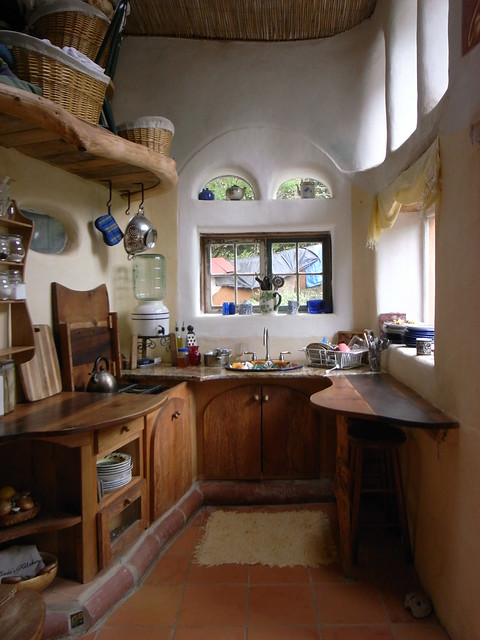
Photo shows a compact bespoke kitchen made out of natural wood with curved countertops. It has several windows and easy access. photo CCC Lindahouse
 
This is closely tied to the financial issues described earlier and therefore to issues of classism and social discrimination based on income, and in some cases to racism. The average Tiny Home dweller is not the same as the average person who lives in a merely small home. Exact figures on these demographics are very difficult to come by, it’s simply not something that is documented and there is no consensus on exactly what a small home is. In the US the demographics and tradition of trailer park residents suggest lower income people, those who would traditionally be considered lower or working class and, due to historic and systemic racial discrimination and town planning2 regulation, are likely to be of minority ethnicities3.

When espousing the right of people to be able to build and own their own homes, or to have access to not just affordable housing but also housing that is fit for purpose we need to be aware of who is able to access these new innovations and do our best to try and breakdown and overcome existing systemic persecution of those groups who have not been afforded the luxury of such housing including those on a low income and those from BAME communities. Part of this involves examining our existing attitudes toward those in small and low cost housing and how that compares to attitudes to Tiny Houses as well as doing what we can to ensure that our enthusiasm for Tiny Homes does not exclude the already excluded and perpetuate inequality.

Ready for the next instalment: read Part 3 here


1 for issues relating to the privilege of minimalism please refer to the Pratchet quote from Part 1 and consider how it is easy to get rid of possessions when you know you can afford to buy a new one should you need it).
2This excellent history of Suburbia from McMansion Hell blogger Kate Wagner gives some insight into mid century town planning in the US https://mcmansionhell.com/post/154653904191/a-pictorial-history-of-suburbia

3This wikipedia article on White Flight may shed some light. https://en.wikipedia.org/wiki/White_flight#Government-aided_white_flight

If you like my writing why not support me by Buy Me a Coffee at ko-fi.com

Friday, 21 June 2019

What should we ask about Tiny Homes - Part 1


Recently I’ve become somewhat obsessed by Tiny Homes and the Tiny Homes Movement and it’s got me thinking over some issues and asking a few questions.

First of all what are Tiny Homes and how is it a movement?


Tiny homes are exactly what they sound like, very small compact homes often under 37m^2 and generally made as temporary buildings or to be mobile.

The definition often includes converted vans and vehicles such as buses but crucially doesn’t include traditional commercial RVs, camper vans or caravans. The reason for that distinction is something I’ll get into later.

The Tiny House Movement is a term for the online and often international communities created to talk about and share ideas relating to tiny homes. There isn’t one firm fixed ethos or manifesto but shared goals and beliefs usually include some take on minimising footprint, being eco-friendly, downsizing, minimalism, and being rent or mortgage free as well as personal freedom. However the motivations for people deciding to live in a tiny home are as varied as the people who chose to do it. From retirees to hippies, young professionals to families, travellers (please note the lower case t here) to people looking to settle down: many people are drawn to the idea of tiny house living.

There are a multitude of websites forums, Facebook groups and YouTube videos dedicated to exploring the tiny home movement and tiny homes themselves. So if you would like to fall down that particular wormhole you won’t have to look hard.

There are many things I enjoy about tiny houses and the movement, I wouldn’t have fallen down the rabbit hole otherwise. The two big appeals for me are firstly that there is a lot of opportunity for being environmentally friendly and conscious and secondly that it provides an option outside of the standard model of the capitalist housing and rental economy. Additionally the opportunity for highly personalised customised spaces is very appealing: who doesn’t want to live in a bespoke crafted house?

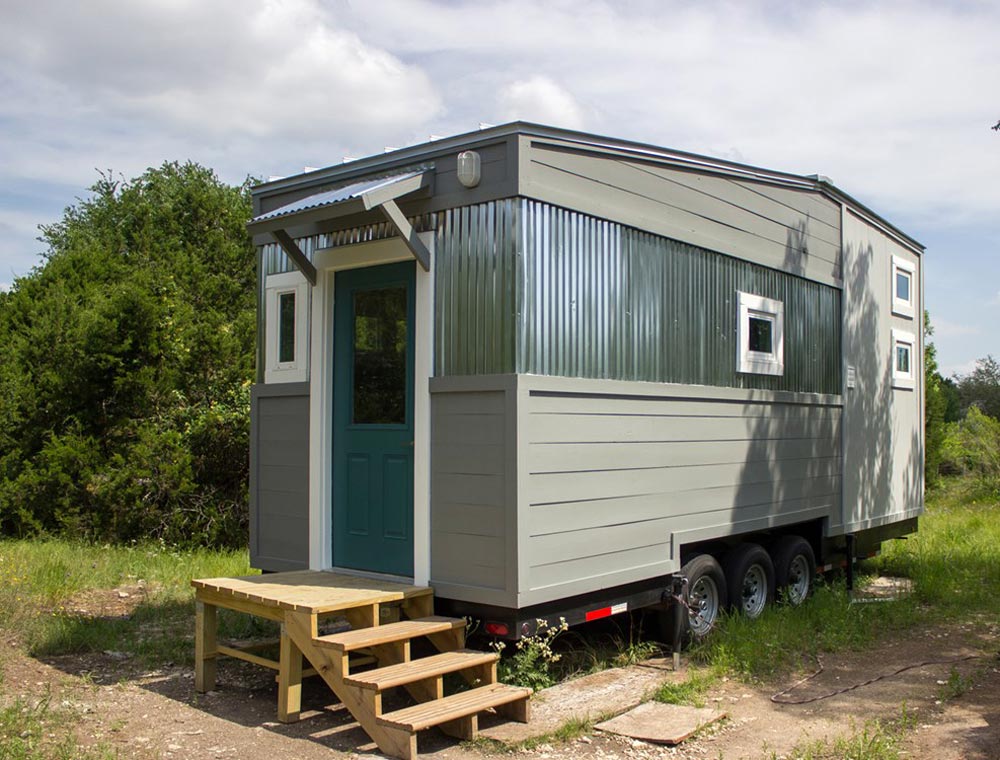
Image shows a small home on a trailer clad in grey panels. It has a teal green door and wooden set of external steps. From Reeds Road Home Design

The Housing Ladder Alternative


It’s the alternative to the prevailing housing market aspect that I want to tackle first, though. 

Undeniably for many people, the majority I would say in fact including those who are home owners, the current model for housing in the UK and other Western capitalist countries is difficult, expensive, and not fit for purpose. We devote a huge portion of our earnings to either paying a mortgage or rent. The cost of housing has shot up over the decades making living in some areas only accessible to the very wealthy unless you are willing to live in cramped squalor. Though they are slowly and not without a fight being improved, laws surrounding rental accommodation have long been in the favour of the landlords leaving renters in often precarious living situations and dealing with high rent and often very poor housing including damp, mould, structural safety issues, fire hazards and poor security. Though renting is seen as the norm and a perfectly reasonable living option in many countries, in the UK at least it is often treated as inferior to home ownership. Home ownership is seen as the goal and a sign of being a “responsible adult” however the cost of buying is now so high that many younger people (and for this article that’s pretty much anybody under 35) are unable to get onto the housing ladder without incurring significant debt or being fortunate enough to use equity from their parent’s home.

When finding somewhere safe comfortable, practical and above all affordable to live is so difficult it is no surprise that people start turning to alternatives and for them Tiny Homes may be the ideal solution. Now we get to the crux of the issue: Tiny Homes as a solution to high rents and a hostile housing market. But why is that a problem? Surely that’s to be celebrated and encouraged. I see it as only short term solution to a much larger problem and one that allows people to think we are addressing the housing crisis when all we are doing is affixing a sticking plaster.

Tiny houses are undoubtedly a good solution for individuals but they are not a solution to overcrowding and high costs of living. Tiny living spaces have been a feature of capitalist housing for centuries and while they do undoubtedly provide shelter for those in need (and who can pay) they don’t bring about any end to a hostile housing environment. Tiny Houses have the advantage that they are individually owned and therefore not contributing to (or minimally at least) the housing market. The issue of course is in this individuality that, with the exception of those who live in planned communities, the benefit of this new way of living is restricted to a few and doesn’t lead to systemic change. If anything it can serve to uphold the current system as those in power are able to point to those who “survive” in such tiny dwellings whilst continuing to pay rent or fees to management companies. It’s worth noting that blame for this shouldn’t be placed on the individual tenants who are simply doing the best they can.

It could be argued that those turning to Tiny Houses are undermining the traditional housing market, but it simply isn’t being done on a scale that has any real impact on the status quo. Instead of it being a solution that benefits many, it is the preserve of a few.

This leads nicely into my next point. As I said, Tiny Home owners often cite reducing housing costs or getting out of expensive housing markets as core motivations, and it’s indeed true that Tiny House living is often significantly cheaper than even small homes in the traditional housing market. However that doesn’t necessarily make them affordable. Some of you may be familiar with the “Sam Vimes “Boot” Theory of Economics” from author Terry Pratchett.


The reason that the rich were so rich, Vimes reasoned, was because they managed to spend less money.

Take boots, for example. He earned thirty-eight dollars a month plus allowances. A really good pair of leather boots cost fifty dollars. But an affordable pair of boots, which were sort of OK for a season or two and then leaked like hell when the cardboard gave out, cost about ten dollars. Those were the kind of boots Vimes always bought, and wore until the soles were so thin that he could tell where he was in Ankh-Morpork on a foggy night by the feel of the cobbles.

But the thing was that good boots lasted for years and years. A man who could afford fifty dollars had a pair of boots that'd still be keeping his feet dry in ten years' time, while the poor man who could only afford cheap boots would have spent a hundred dollars on boots in the same time and would still have wet feet.

This was the Captain Samuel Vimes 'Boots' theory of socioeconomic unfairness.


In the Tiny House movement it’s not to say that Tiny House owners are necessarily rich or wealthy, but like the person who can afford to pay for the good fifty dollar boots and have them last a lifetime, the Tiny Home owner has the money to invest in their new low cost living arrangement.

There are of course exceptions, but for the most part, Tiny Homes require you to be rich in either time or money, if not both. While £16,000 may be a tiny amount to pay to own your own home outright, it’s still a substantial amount of money for a person to have. Those built for that little often also rely on the ability of the home owner to dedicate time and effort to do much of the work themselves – a fully built Tiny House will cost upwards from £25000 in the UK. Less than a mortgage deposit perhaps but still not a small amount and one that many won’t have sitting in their banks. 

Additionally, whether going self built or pre-fab you need to have somewhere to live while it’s being made and before it’s on site, costing you rent or mortgage payments. Essentially you have to be able to afford standard housing before you can go Tiny. Then there are costs like having a suitable vehicle to tow with if you go for a mobile model, or the cost of transport for larger or shipping container style homes. You also need to consider location. You may be lucky and have access to rent free land but for most there will be some sort of land purchase or rental cost or weekly hire rates. 

Now think about the type of people who would really benefit from Tiny Houses: those who are low income and struggle with the traditional housing market: single parents, people who are unemployed, those who are currently homeless, disabled people and other low income groups. These are the people who are most negatively impacted by the high cost of living in many areas and who would benefit from genuine alternatives to the traditional housing market. They are also the same people who are least likely to be able to afford the initial costs of a Tiny House. If they don’t already have savings they may be able to get a loan, but only if a bank approves them and if they have a steady income that can take on the repayments. Paying back a loan while also paying for accommodation while your house is being built might be too steep for many and those who work full time just to afford that probably can’t afford the time off needed to self build, or they have other limitations such as disability or carer duties to restrict their ability to self build.

When these factors are considered we can see that while Tiny Homes are a low cost housing solution they are not necessarily affordable or accessible to those who are struggling with the traditional housing market.

This is Part One in a series of three on Tiny Homes. Read Part Two here. 


If you like my writing why not support me by Buy Me a Coffee at ko-fi.com

Friday, 7 June 2019

The Greggs' Effect


Veganism, classism and disableism


I’m pretty sure everybody in the UK and a fair few people outside it will have learned that Greggs – a low cost bakery chain – released a vegan sausage roll in early 2019. It caused much consternation amongst some quarters, most noticeably those who look up to the conservative “political pundit” and former game-show-host Piers Morgan. Piers’ over-the-top and toddler likerejection of the vegan sausage roll was a rallying cry for those who hate veganism generally, people who simply couldn’t understand why vegans might want a budget bakery item. Sadly this criticism and disbelief wasn’t just limited to those of a more socially conservative bent. There was also a surprising amount of wailing from people within the vegan community. It’s not healthy enough? Why would you want a meat replacement? If you’re vegan why are you buying from Gregg’s at all.

In some ways this second wave of criticism was actually more frustrating. After all anybody who doesn’t belong to the cis-male, white, straight, “British” group is pretty used to at some point coming in the firing line of Morgan and his brethren. That’s sadly the way of the world: stray from the path of what “they” have defined as “normal” and you will be criticised (or downright discriminated against). But when you are part of a counter-culture or alternative lifestyle group, you generally expect a certain amount of solidarity from within, even accounting for differing opinions and personalities. So a wave of criticism from your own “side” especially when you are also being attacked from other quarters can really knock the wind out of your sails.

photo from wikimedia image shows the store front of a Greggs Bakery. It has a blue and white sign with an orange square logo)

So now it’s almost 6 months later, and the financial news is reporting that Greggs is reporting soaring profits and steady gains in the stock market almost entirely attributed to increased sales of and because of the vegan sausage roll. With that success, Greggs is talking about expanding their vegan range, which for me is only a good thing. But with that comes controversy. Remember that criticism from other vegans I talked about only two paragraphs ago? Right that becomes an issue. You see there is a perception from non-vegans that veganism should be “healthy”, and this is a perception that is held up in some quarters of the vegan community. Vegan food should be “healthy” natural, full of vegetables, whole grains and other nutritionally superior goodies. Additionally we shouldn’t want to be mimicking meat because this is somehow ethically unsound and requires more of those pesky “unnatural” processed foods. These are the sorts of people making suggestions for new Greggs products that include lots of different vegetables and interesting grains, less fats and less delicious golden pastry.

But here’s the thing – nobody thinks that Greggs is or ever has been a bastion of healthy lifestyle. Nobody, vegan or otherwise, goes to Greggs expecting a nutritionally balanced, “healthy”, whole foods, natural lunch. You go to Greggs because you are hungry and it’s there and sometimes a baked good is exactly what you fancy. And that’s entirely ok.
Initially this debate may look fairly inconsequential and not something worth spending much time on. If one group doesn’t like fake meat and another does what’s the problem? The problem is that this actually becomes an argument about disablism, classism and food snobbery within veganism and other lifestyle choices.

So let me tell you about an experience I had just today. For context, I have been to Greggs only once since the introduction of the vegan sausage roll and I wasn’t a frequent visitor before that. Recently my CFS/ME has been worse than usual and I’ve been having a higher number of high fatigue days. I’m finding it more difficult to balance out exertion and rest as needed. So on this particular Thursday I had been to get my hair done. Due to the timing of the appointment, I hadn’t had a proper lunch though I had had a snack. My mid afternoon I was very hungry and my bloodsugar was low. I was also starting to struggle with fatigue. Due to that difficulty I wasn’t thinking straight and instead of getting a taxi from the place literally next door to my hairdresser’s I decided to get a bus half way home and walk the rest. I was soon really exceptionally fatigued and struggling to walk much. I was shaking and walking with slower and slower steps. I was also very hungry. All I wanted to do was sleep and eat, preferably at the same time. I hadn’t budgeted for lunch out, after all I’d just spent money on getting my hair done and now had to be conservative with spending. Luckily for me my route took me past a small shopping centre. So now I had options. Supermarket, discount food store, chain cafe and Greggs. In reality due to my fatigue and my budget I didn’t actually have that many options at all. I did not have the energy to walk around a supermarket looking for individual easy to eat vegan items. That would probably end up costing around £5 too which is more than I wanted. Likewise with the discount food store – it may be discounted but what they have available is varied and it would take a lot of energy to search out and check labels. The cafe would be more expensive and I’d probably only be able to get a cookie. Greggs and their vegan sausage roll was looking like some sort of greasy baked good oasis.
I got my sausage roll (the very last one) and ate it in a very few bites leaning against the wall and in short order the signs of hypoglycemia subsided and I and a fraction more energy. I was only £1 down to boot. It only took a short rest against the wall (because all the benches were out in the rain) and I judged myself able to make it home on foot. Thank goodness it was downhill from there. Even then the last 100m were painfully slow and on getting home I still had to have a protein smoothie banana and then fall into a solid sleep for two hours.

photo author's own. image shows an agender person wearing glasses and a black hoodie. They have green and purple curly hair and are leaning against a wall holding a sausage roll in a Greggs paper bag to their mouth

But what’s the point of this not so thrilling look into the average day of somebody with ME? Well here goes. That slightly greasy, warm, flaky pastry encases lump of processed fake meat was exactly what I needed right then. Regardless of what I actually like the taste of what I needed was something simple, that I could eat right then and there with one hand, that had protein fat and carbs, that required little thinking, no checking of ingredients and of course was cheap.

Don’t get me wrong I love good food. I love home-made-from-scratch food. I love piles of vegetables and interesting ingredients. I am the sort of person who makes asparagus and cucumber beurre blanc with pasta as “an easy simple meal”. I can frequently be found shoving handfuls of fruit into my face. I love “healthy” “natural” food. But what I also need is food I can eat and food I can afford. 
An awful lot of vegan food that goes down the healthy lifestyle route just doesn’t tick those boxes. When I am that exhausted or have brain fog issues I can’t be checking ingredients to make sure something non-vegan or something that sets of my IBS isn’t in there – and yes many common health foods are super incompatible with IBS, which is a common component of CFS/ME and EDS. I don’t have energy to stand dithering at a counter figuring out which superfood salad really hits the spot. I don’t have the energy to go around a supermarket looking for different items. Sometimes it’s because the things I need in order to be healthy are things over looked in so-called healthy food (and I promise not to derail into an entire other article about notions of “healthy” food) and that is that carbohydrates, some fats and protein, the big easy things, are really important to a person’s diet and are often especially important to somebody with a chronic health condition who just needs fuel. Vitamin B12 is essential to body function and something I need to be mindful of on a vegan diet. But it doesn’t matter how much B12 I get if I don’t get the required number of calories, grams of carbohydrate and protein into my body to just keep me upright.

On top of that I don’t have a lot of money. If I want to do things like get my hair dyed at a salon I budget for it carefully (including taxis when I remember them) and that means I can’t be spending a fortune on eating out every time I get hungry (and no I can’t carry packed lunches everywhere, that gets heavy and energy sapping fast).

Sometimes I just want easy tasty food that I don’t have to think too hard about and that I can afford.

Sometimes I just need easy tasty food that I don’t have to think too hard about and that I can afford.

I am not going to Greggs because I want nutritionally balanced fancy food. I am going there because it fills a particular niche in daytime food whether you are vegan or not. So for everybody suggesting that Greggs start doing a butternut squash and spinach pastie, whilst yes that does sound lovely, will you kindly shut up. Go and get that somewhere else. You can I assure you find that somewhere else. What I want is a vegan corned beef slice. Or a vegan cheese and onion roll (this is a flagrant lie, I’ve never liked cheese and onion rolls and onion triggers my IBS). Or a vegan steak bake. Now there’s choice. Things so simple the ingredients are in their name. Things so simple you can get it and a drink and have change out of a fiver.

You may be thinking “well if you are disabled and have such difficulty finding food then maybe you shouldn’t be vegan?” or even “Well if you haven’t got much money then you shouldn’t be fussy about your food?”.
I’m just going to give you a few moments to really think about what you are saying there.


Let me tell you how those things sound to me: when you say somebody who is disabled, chronically ill or poor shouldn’t be vegan you are telling me that somebody who is disabled, chronically ill or poor shouldn’t be allowed to have their own ethics, morals or beliefs. I don’t care if you agree with my beliefs or not, but I am very, very concerned that you would think that a person’s right to their own thoughts, their own beliefs and ethics should be governed by their physical ability or health and their financial status. Every single person in this country is by law guaranteed the right to have their own ethics and beliefs and to act on them as long as they don’t cause harm to anybody else. If my beliefs are that I don’t eat animal products then I should have the right to do so even if I am ill, disabled or poor. Because on top of that right to hold ethics there is also the human right that I or anybody else should not be discriminated against due to disability or socioeconomic status. If non-disabled people can choose to eat an animal free diet then why do you believe that somebody who is disabled does not have that right?

If you have the energy to get “higher quality” food or to look for something more nutritionally complete or with fresher ingredients. Great, you do that. And on my good days I’ll be right there with you enjoying some delicious delicious greens. But on my bad days if that’s all that’s on offer I won’t be by your side. I’ll be on the floor crying because my legs don’t move any more.

To insist that all vegan food should be healthy, natural and conform to a certain narrow view of what vegan food should look like is classist and disableist. To level that criticism at other vegans, to tell them they are “doing it wrong” or aren’t “proper vegans” or should be in some way ashamed for wanting a mass produced cheap baked good is classist and disableist and you need to stop. You eat what you want, and let me eat my dream vegan corned beef slice before I pass out.

If you like my writing why not support me by Buy Me a Coffee at ko-fi.com
Monday, 31 December 2018

Open letter to the Trades Club about accessibility


An open letter to The Trades Club in Hebden Bridge following my visit there. This was sent on 17th December. I waited for a response from them and include any response from them below. There is further comment and thoughts at the bottom of the post. 


To you all,

Apologies for contacting via facebook, I was unable to find a contact email address.

I made my first visit to The Trades Club on Friday 14th of December. Knowing the reputation of the place as inclusive and socially liberal I was looking forward to my visit. Sadly that excitement was soon quashed when I realised there was one group of people you are not inclusive for and discriminate against: disabled people. I am fortunate that I can manage stairs, but due to my disability it is not without pain and difficulty. There are many others who simply wouldn’t have made it passed the front door. Understandably considering there is no step free access, no accommodations have been made for wheelchair access such as wide aisles for getting through the main hall or adequate seating options in the bar. However these accommodations don’t just benefit wheelchair uses but help people with other disabilities including mobility issues.

You have no accessibility statement on your website. No accessible toilet (which isn’t just a matter of allowing a wheelchair in). No notices about hearing loops, lighting, seating or signing.
There are no accommodations what so ever for disabled people. As a minority group we have been forgotten or dismissed as not worth a thought or the time and money. Without even an accessibility statement on your website there isn’t even an indication that accessibility for disabled people has been considered at all.

What particularly makes this a sore issue, apart from people not even being able to get into the venue, are your multiple statements and posters stating that you are an inclusive venue. You promote acceptance and outlaw discrimination based on race, gender, sexuality and ethnicity. This is wonderful. I am included in more than one of those minority groups and appreciate that sentiment. But it is a bitter pill to swallow when you continue to discriminate against disabled people and I was lucky to get into the venue at all.

I understand the building is difficult. I understand you are not a big corporation with plenty of financial backing. But I don’t believe that is an excuse. How you choose to spend your budget, what you choose to say, what modifications to the building you do and don’t make are choices. I don’t expect every business and building to be a flagship of accessibility, but I do expect that groups which espouse inclusivity, acceptance and equality to make choices that do not discriminate against disabled people.
I am disappointed.
I am let down.
I am unlikely to visit again unless changes are made.

As is my standard practice I will be posting this as an open letter on my blog Axes n Yarn in one week’s time. I will include any reply I have received from you. I do this because disableism is an issue that needs to talked about and because disabled people as a minority group need their voices to be heard.

Though this is a personal email based on personal experience I should also disclose that I work freelance as an accessibility consultant and advisor via my website www.Accesscheck.net

Yours sincerely.

Robin Tynan

Their response on facebook on the 17th of December:

Hi Robin - thanks for your email. I can assure you, making the Trades Club accessable for all is at the top of our priorities. Will elaborate on email, of course. Best wishes Mal Campbell [email address redacted]

I gave them my email address so they could contact me there. I then received the following email on December 18th

Thanks for forwarding your email address. The Trades Club secretary, Michael Coneys, will be back with a response shortly.

Final Thoughts

As of writing this blog on 31/01/2018 I have had not further contact from The Trades Club. My original letter said I would publish this post a week after sending, but due to various factors I've left it until now - roughly two weeks. I appreciate that during that period it has been Christmas and the associated public holidays. However, I should note that The Trades Club has been open during this period.

I think my concerns and feelings on the subject are clear from the letter I sent to them. I am of course not pleased with their lack of response. It does not leave me feeling assured that accessibility is a top priority. It is difficult to believe that accessibility and ending discrimination toward disabled people is a priority when a business has no mention of accessibility or disability on their website or any of their public information. It is difficult to accept that accessibility is a priority when a business has been open for over 35 years and no modifications or adaptations have been made, save for a single line of small print text stating that they are not accessible on their website.

I am of course disappointed at the lack of response from the Trades Club. Though it has many qualities to recommend it, I am somewhat soured by this experience and even if accessibility weren't an issue (there are some days when I wouldn't make it past their front door) I would be hesitant to support them in the future. I honestly feel that any venue or business that claims to be inclusive and welcoming of all minorities and yet fails to address the barriers which are excluding a group of people is disingenuous and needs to examine their ethics closely.

Should I receive any further correspondence from The Trades Club I will post an update.

UPDATE 08/01/19

I received the following email on 07/01/19. I haven't replied as I am not sure if a reply is necessary at this point. I may follow up their offer to telephone to talk over various points but will be doing so in a professional capacity as Access:Check. I am accepting of their apology and acknowledgement of problems. I continue to dislike, from any group, passing blame on to landlords. That is not because I believe the landlords are without fault, but because I believe there is a shared responsibility between tenants and landlords to address structural accessibility concerns, especially in long term leases.

Hi, Robin,
Mal passed on your comments regarding the Trades Club.
Firstly, could I apologise for the delay in responding and secondly,
for the Clubs shortcomings.We fully acknowledge your critical
comments.
While major structural changes are in the hands of our landlord ,(plans have been drawn up to link the lower and upper floor ),
there can be no excuse on our behalf for the lack of information
on the website . Clearly,we will set about trying to implement many of your suggestions.
In the meantime if you wish to discuss this in more detail, please
feel free to contact me. [redacted]
Kind Regards ,
Michael Coneys, Secretary ,The Trades Club


Sunday, 16 December 2018

Sunday Short - Can't we have pretty things?

So I need a new shower stool right. But I have this thing where I loathe things commonly sold as "shower stools" in the UK. They are so often aluminium and white or grey plastic. At first I thought this was some sort of internalised disableism, and in part it may be, but it's actually mostly something else.

The grey plastic and aluminium is very institutional, very medicalised. It is reminiscent of, in-fact often the same items as, those used in hospitals.

And I hate being pathologised like that. I hate being reduced to a disability and being classified as a medical problem.

Just because I have a chronic illness, just because I am disabled does not mean that I shouldn't be allowed to have personal preferences or style. 

photograph showing shower stools and adaptive devices made of aluminium and grey and white plastic.

This is just a part of the wider problem of how disabled people are treated in the UK. It is a symptom of “othering” and of creating an “us” and “them”. Disabled people are the “them” of society, segregated and kept in place, identified and marked out by their aluminium and grey. These hospital style contraptions are the modern black triangle patches*.

Only when we start recognising that disabled people are, shockingly I know, people who are individuals with their own lives and interests that have nothing to do with their health will we start to break down the barriers between “us” and “them”.

And in the mean time I have to deal with the fact that something as basic as a wooden shower stool is seen as a luxury item costing £50 and up: my choices are to buy something cheap and not fit for purpose or a sturdy but ugly and medical styled aluminium stool.


*Disabled people were designated with black triangle patches in Nazi Germany as part of the asocial group. However some modern disability rights groups are reclaiming the symbol for their campaigns.

Thursday, 11 October 2018

Reconsidering the "Walkable City"


Based on previous posts (and chatter on facebook if you follow me there) you may be aware that I am interested in the concept of solarpunk and future cities. For those not initiated to the idea of solarpunk it is the concept of a better society that is built using modern (or future) science and is harmonious with the environment and with the people who live in it. If you read my post on Wakanda you will know my delight about a city that is not only environmentally sound, scientifically advanced but also people friendly and accessible and that’s a big deal.

The concept of walkable cities then, surely that fits into my solar punk future science ideal? Well yes and no. A recent article from the Guardian inadvertently provides the perfect example of this. The article itself is well written and well sourced with examples of a number of cities and studies but really the first indication of an issue is the title “a walkable city”. This name itself discounts large proportions of the population who can’t walk at all or easily. You could argue that the title isn’t specific but instead is referring to a concept. However the wording, as innocent it may be, directs people’s thoughts to walking and overlooking those that can’t walk.

A walkable city isn’t always about places being totally pedestrianised but the aim is for pedestrians to take priority and to be safe navigating on foot. The benefits are undoubted - lower levels of pollution, less collisions and accidents, better footfall and sales especially for small businesses. These are undoubtedly good things as is encouraging those who are able to to walk a little more to get more fresh air and be more active. But a potential benefit that is ignored is allowing disabled people to be more independent as well.

The article cites a number of cities and projects and the approaches they have taken. In London they have been using cameras and software to track the movement of cars, pedestrians and cyclists in order to determine the most efficient routes and road layouts to encourage more pedestrians. In Auckland the council have taken steps to make areas more “pedestrian friendly” by adding more trees and benches and removing car parking. Greater Manchester are creating “beelines” a joined up system of paths and cycle routes across their city to aid people walking from place to place and reducing the reliance on cars.

What is missing from all of these projects are considerations or even an acknowledgement of disabled people and the needs they may have or how their experiences may impact what counts as a “walkable” city.

Tracking footfall, bicycles and cars is a useful and important project and will certainly provide important information, however it only leads to an accessible city if those various pathways are wide enough for pedestrians and power chair or mobility scooter users. Trees and benches are great, especially providing seating for those who fatigue easily, but they must be placed in such a way that they don’t provide impediments to those who are blind or partially cited, and leave room for walking and chair based pedestrians alike to use the paths concurrently. Likewise for cycle and footpaths that span cities.
Creating pedestrian zones that allow easy walking is a wonderful idea but we also must recognise that walking across a city centre, even a walk of only a few hundred yards is impossible for some people. There still needs to be adequate disabled parking - and for there to be a cultural shift which doesn’t restrict them to only those who have been granted a Blue Badge (Blue Badges are often awarded based on your PIP award, since not everybody is awarded PIP no matter how high the need, this means people who need the badges may not have them).

But it goes even beyond that. According to some metrics York would be considered a “walkable city” by many. Much of the city centre is pedestrianised with limited traffic flow and priority given to pedestrians. This encourages a high percentage of thriving independent businesses. Anybody with mobility or other access issues would be quick to point out though, that it is most definitely not an accessible city. The streets are narrow and crowded, they are winding and uneven: a mix of narrow kerbs, cobbles, paving stones, sign-posts, bike racks and more. Getting around on foot with mobility issues is difficult: getting around in a chair is prohibitive. That’s even without addressing things like noise and visibility or the additional barrier of steps into buildings. A walkable city is not an accessible city and it’s very easy to end up with one at the cost of the other.

What frustrates me most about this article is how many of the project authors have been keen to consider inclusivity, for example Action Aid’s app and program to allow people to document streets and buildings they feel safe or unsafe in (and then hopefully passing that on to organisations that can make improvements). It quotes Susan Claris of Arup as saying “[a] huge indicator of a civilised walkable city” is safe public toilets. Clearly some thought and care is going into these studies. But what of people who don’t have access to a public toilet at all, safe or otherwise? Of the many public facilities across the UK (including over 4000 council run toilets) only a fraction of those are labelled accessible, fewer still are actually accessible (it’s not accessible if it’s also your storeroom) and even less are rated by Changing Spaces as suitable for an adult who needs a carer. In these pedestrianised walkable cities in which people aren’t able to dive into their car and speed home if caught short accessible toilets absolutely should be a priority.

Even worse in my eyes is that the article cites the “double buggy” test, being used by the Manchester project to determine if paths are wide enough that somebody could get a double pram down. That is important: parents and pushchairs should be thought about (and let’s not forget many of those parents may be disabled in someway themselves - using a double buggy instead of carrying a child may even be an accessibility adaptation for them) and it inadvertently helps disabled people - if a double buggy can get through so can the majority of mobility scooters, manual and power chairs. But nobody likes being an inadvertent afterthought, or in this case possibly not even an afterthought since we aren’t afforded the column inches by the journalist. It is significant because it would imply that the needs of disabled people aren’t being considered in these plans at all. If a double buggy can get down a path then yes a chair can too. But whereas a parent may be able to push a chair up or down a kerb, and over uneven surfaces or around awkwardly placed signs, a person in a power chair may not be able to and that’s just not a concern for these project builders.

Disabled people already struggle with getting out and about. But their absence from everyday public view on the streets of our cities isn’t because we don’t want to be there, it’s because of the barriers architects, councils, town planners and engineers have put in our way. The reason so many visionaries of future cities seem to have forgotten about us is because we are already kept out of site and out of mind by the societies we live in. Creating a fresh new walkable city or a city of the future is an admirable goal but if you look at your artists impressions and computer simulations and all you see are non-disabled people then you’ve gone wrong. You have neglected and discriminated against a large group of people who have every right to enjoy the businesses, places of work and attractions of a city with the same ease, safety and comfort as any other citizen disabled or not. That shouldn’t be forgotten about and it shouldn’t be reduced to an afterthought.

Truly revolutionary design and development comes by considering all the people who will be using your creation. Truly functional design that stands the test of time is something that can be embraced by the whole population and is fit for purpose, avoiding the need for decades of patching and re-engineering. That absolutely means considering the needs of everybody including disabled people.

So what of my shiny solarpunk dream cities? Would they be “walkable”? No. They would be accessible. Accessible to all who need to be there. For many that will mean safe and easy walking for others that will mean spaces and access routes for personal vehicles (electric and self driving of course, this is my dream after all). Streets that can be navigated with ease, clear road signs with braille or audio that can be picked up by a user’s app. Plenty of seating, and yes, good clean accessible toilets. Designated cycle lanes that don’t encroach on pedestrian space. Charging points for electric chairs and scooters. Smooth surfaces and ramps between different levels. Good lighting (reactive for energy efficiency and to reduce light pollution). Options and services for those people who need help carrying things (drones maybe?). Good public transport with easy access points and methods for getting into the centre of “pedestrian” spaces.

Yes some of these are out of our reach right now but many of them aren’t are are what I would think of as basic and minimal changes to a city to make it both accessible and pedestrian friendly. If the money can be spent on these existing projects then it can be spent on improving accessibility.

I don’t want to see any more think pieces on walkable cities. I want to see think pieces on accessible and inclusive cities. I don’t want to be erased from a future that hasn’t happened yet.

Amazingly, the Guardian has written on this subject themselves with an article called "What would a truly accessible city look like" from February 2018. They just must have forgotten about it. 

Sunday, 1 April 2018

Sunday Short - this is systemic disableism

This post first appeared on facebook on 24/03/18

This was inspired by the HuffPost article BBC Journalist Criticises Heathrow Airport's Treatment of Disabled Passengers
This is what we mean by systemic disableism. Having guidelines or systems or accessibility features is all well and good but they have to work. You have to be able to use them smoothly and effectively. If they are an afterthought, addition, or hidden away in the back of a training folder they aren't actually accommodations.

You need to think about accessibility right from the beginning and have accommodations for disabled people as seamless a feature as any service you offer to literally any other customer. If you are designing services or features for your customers you have to include all you customers able bodied and disabled right from the start because if you don't the chances are your accommodations won't actually accommodate. A disabled customer, client, or service user is no lesser than any other customer. They are not a subclass, or different species. They are people who should be valued equally with your able bodied customers. And that means you don't lose a wheelchair.

You can read more about my thoughts on this issue along with more examples in this article: Your Accessibility Needs to Be Accessible


If you like what I write and want to leave a tip you can do so at ko-fi.com/axesnyarn


Laptop Fund

My laptop is on its last legs. It has recurring power issues, is starting to crash more frequently and is doing some weird stuff. Though I have an old back up laptop it is old and has its own problems and doesn't run some of the programs I need. I am disabled and often stuck at home: my laptop is what keeps me connected to the world. I use it to talk to friends and family, see what is going on in the world and to learn.

More than that it's what I use to write for my blog Axes'n'Yarn and to run access:LARP. I have a very very small income through access:LARP but without the laptop I couldn't even earn that! Any contributions to my new laptop fund (or let's be honest, a refurbished laptop fund) are greatly appreciated as I am not sure how I can afford a new one right now and I am scared of loosing my connection to the world. I'm not aiming for a super fancy high end gaming laptop, my needs are fairly modest. I just need something that works, actually charges and keeps me connected.